
Millions of people are currently flocking to Amsterdam to see the works of Johannes Vermeer, a show which is sold out for its whole run. These paintings are paradigms of art, the sort of thing that gives the word art its meaning. Vermeer signed them because he was the one who made them; the man and the work are in some sense the same. When I think about art generally, I picture a Vermeer or Leonardo painting, a Michelangelo or Rodin sculpture. A reasonable first stab at giving a definition of work of art would be to point at some Vermeers and Rodins: Those things, and things like them in relevant respects, are works of art.
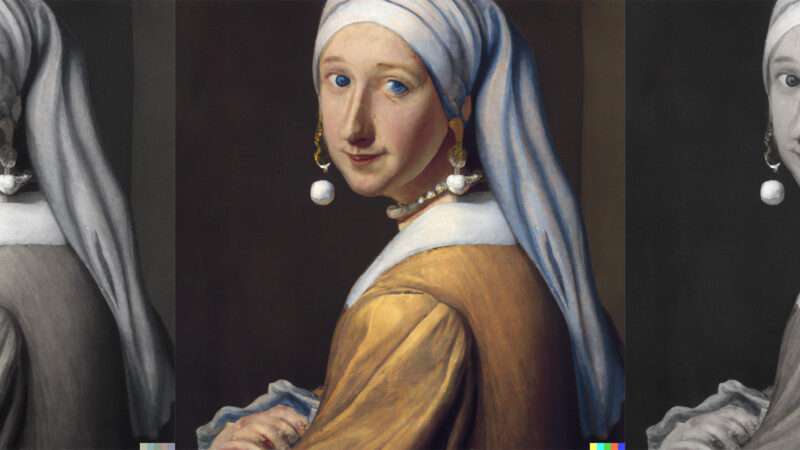
Many of the people headed to the Vermeer show, I suspect, are specifically looking for a direct "unmediated" encounter with actual objects. You can see the images online, of course, or in books or on posters: Indeed, you can't really avoid Girl With a Pearl Earring, which seems to be appearing in all media all the time at the moment, and in many forms, including as the most popular trope in artificial intelligence (A.I.) image generation. But the actual physical surface to which the hand of Vermeer applied the oil and pigment, and which has been loved and preserved ever since, is meaningful, directly expressive, and priceless, in the way that an excellent JPEG of it, or the response of DALL-E to the prompt "me as Girl With a Pearl Earring" still isn't. Going to the Rijksmuseum might not exactly be escaping from information technology (you'll be touring via app, probably) but it does yield experiences of objects that were made before such technologies could have been conceived. This is, no doubt, part of their power for us now: They seem so pre-post-human, that is, so human.











