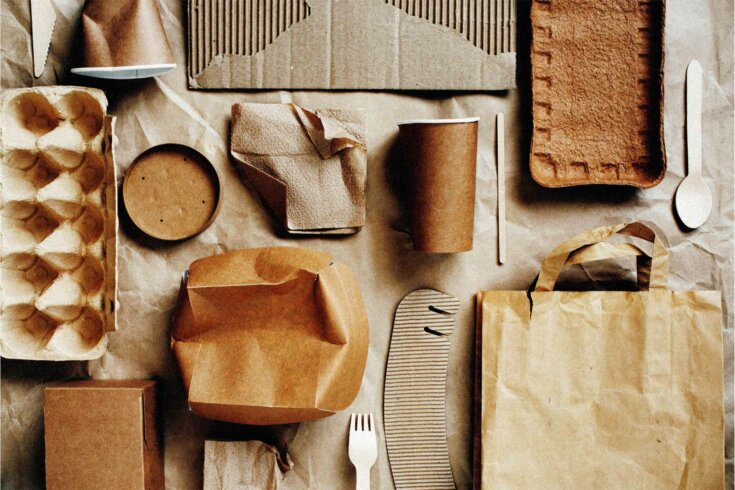
Each year, Canadians throw away the equivalent of 300,000 garbage trucks of plastic waste. But only 9 percent of that gets recycled. Many of the items we’ve grown to rely on every day—Tim Hortons coffee cups, grocery-store bags, takeout cutlery—end up in landfills or, worse, in our rivers and lakes. In an attempt to achieve zero plastic waste by 2030, Canada has banned the use of these products, with retailers swapping single-use items for seemingly more sustainable alternatives. But in the months since the regulations were first enacted, environmentalists have expressed concerns over how the increased demand for paper could create an entirely new problem by putting more pressure on Canada’s forests. Is the federal government’s strategy actually working? To find out, we spoke with Toronto Metropolitan University’s Natalia Lumby, whose research focuses on sustainable packaging.
Paper has earned a reputation as a sustainable alternative to plastic. We see it used in paper straws, paper cups, and paper bags. But how will the shift from plastic to paper affect Canada’s pulp industry? Should we be concerned?