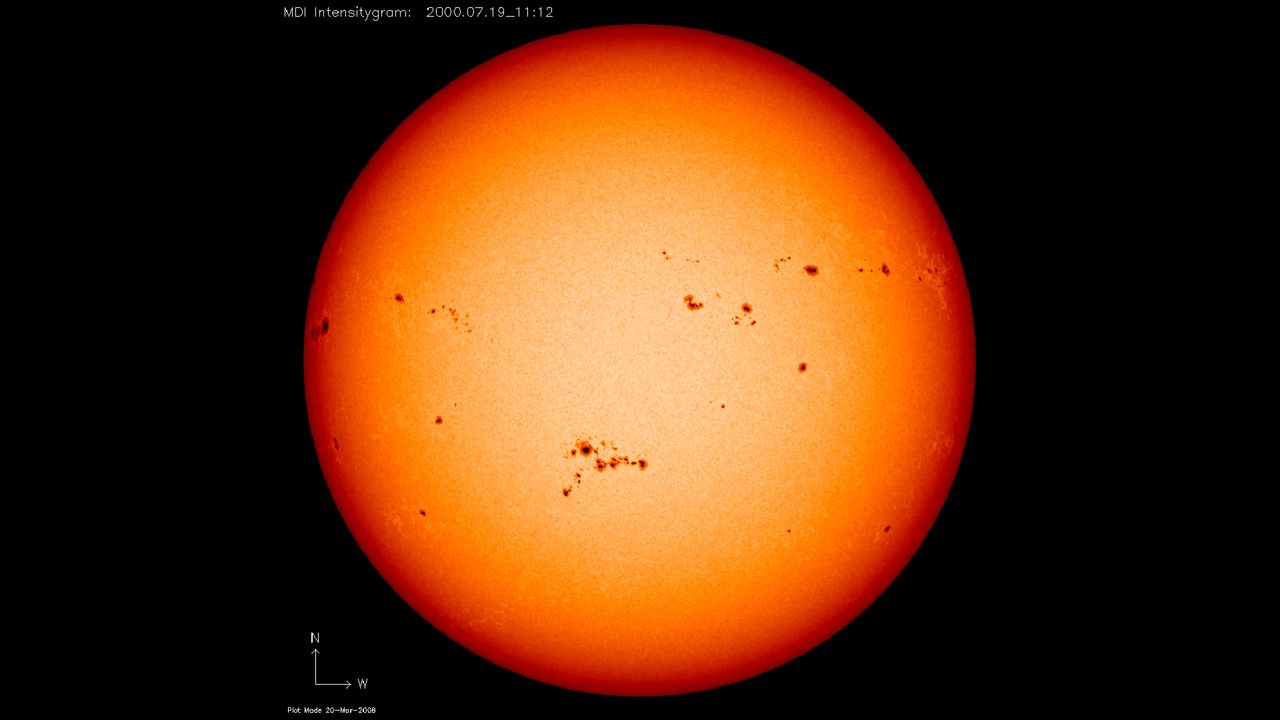
The sun is powered by the nuclear fusion of hydrogen to helium, deep within its core. Above the sun's surface, however, a different force dominates: electromagnetism. This force is responsible for sunspots, solar flares and coronal mass ejections (CMEs).
These processes follow the solar cycle, an 11-year cycle of increasing and decreasing activity on the sun when the sun's magnetic field exhibits a full magnetic reversal. At the trough of the solar cycle, sunspots are sparse, and subsequent solar flares and CMEs — which typically originate from sunspot regions — can be absent for months at a time. This phase of the solar cycle is called solar minimum, which is in stark contrast to solar maximum, the peak of the sun's 11-year cycle of activity.