
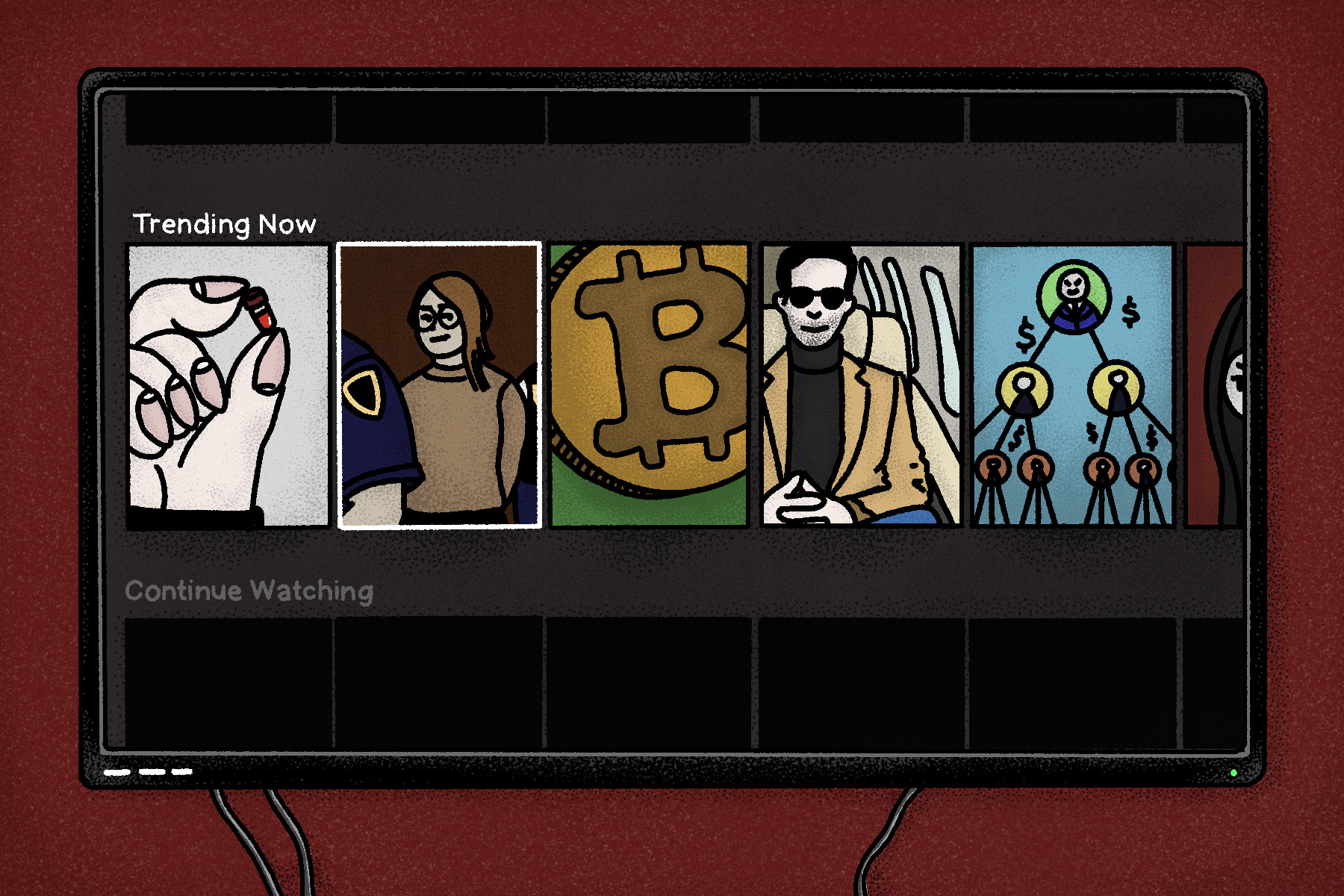
The year 2022 has shaped up to be the year of the scammer. In April, just two months after The Tinder Swindler—a story about a man who engineered a Ponzi scheme to con multiple women out of hundreds of thousands of dollars—made its Netflix debut, it became the streaming service’s most-watched documentary of all time. TV series and documentaries of a similar vein have taken the likes of Elizabeth Holmes, Anna Delvey, and Billy McFarland and turned them into household names, making them famous for their ability to piece together the illusion of success out of shards of failed business endeavours. Holmes, the ex-CEO of the now-defunct Theranos, was found guilty of four counts of fraud and conspiracy for running a supposedly revolutionary medical diagnostic company without any actual working technology, defrauding investors of over $140 million (US). Delvey, who was found guilty of larceny, pretended to be a German heiress to defraud banks and hotels of millions of dollars. Meanwhile, McFarland scammed investors out of $26 million (US) for his Fyre Festival, only to leave hundreds of people stranded in the Bahamas when the event failed to materialize. The sham festival quickly became an internet meme and landed him with a six-year prison sentence.
While these shows have put faces to some of the buzziest scams of the decade, the reality is that the fraud industry is much larger than a faux heiress or a wayward event organizer, relying heavily on anonymity over an ostentatious personality to thrive. The internet, especially, has made scams ubiquitous. Some are commonplace, like phishing campaigns that defraud thousands of people a year by requesting sensitive information, such as credit card numbers. Others are more sinister. At the end of February, while the world watched Russia invade Ukraine, an NBC investigation found that some TikTok users were attaching warlike soundtracks—filled with gunshots and sirens—to videos purported to be of Ukraine, then asking for donations. More recently, an Ontario couple was scammed out of their life savings—$1.2 million—after being made to believe they had won a US lottery.



