
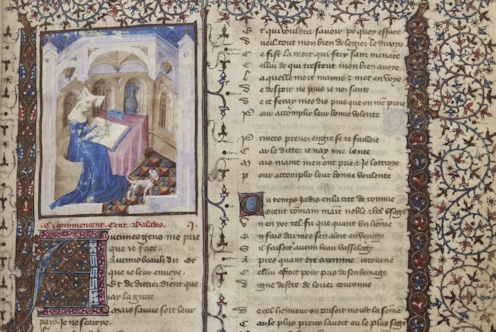
To “doodle” means to draw or scrawl aimlessly, and the history of the word goes back to the early 20th century. Scribbling haphazard words, squiggly lines and mini-drawings, however, is a much older practice and its presence in books tells us a lot about how people engaged with literature in the past.
Although you wouldn’t dare doodle on a medieval manuscript today, squiggly lines (sometimes resembling fish or even elongated people), mini-drawings (a knight fighting a snail, for instance), and random objects appear quite often in medieval books. Usually found in the flyleaves or margins, doodles can often give medievalists (specialists in medieval history and culture) important insights into how people in earlier centuries understood and reacted to the narrative on the page.