That’s all for now – thanks for following. Here’s a recap of some of the big developments that have come out of Dubai today:
Azerbaijan’s bid to host Cop29 next year was successful, breaking a war-fuelled deadlock among countries in the UN’s Eastern European group over which of them would host it.
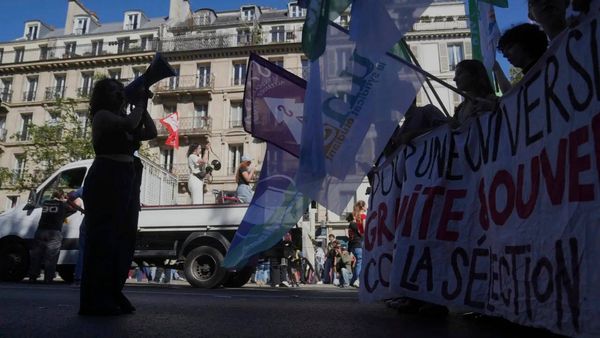
Activists have criticised the UNFCCC’s handling of protests over Israel’s bombing of Gaza and the UAE’s detention of political prisoners.
The Netherlands, Canada and several other countries have promised to crack down on subsidies for fossil fuels.
Campaigners have hit back at oil cartel OPEC’s attempt to make its members reject any text that targets fossil fuels.
UK environment minister Steve Barclay has defended his more senior colleague Claire Coutinho, who is responsible for stopping the country’s planet-heating pollution, for having left Cop after only a brief appearance at the start.
Tune back in tomorrow for more coverage as the conference heads into its final days.
Updated

The decision to make Azerbaijan – a repressive country whose economy depends heavily on fossil fuels – the host of Cop29 has not proven popular.
Svitlana Romanko, an environmental lawyer and founder of Ukrainian campaign group Razom, which calls for a full embargo of Russian fossil fuels, said: “We are not surprised at all that oil dictatorships have created a bloody trade union trying to sustain their fossil fuel regimes… We are upset how the democratic leaders and UN institutions let them do so.”
“Azerbaijan is a small scale Russia,” she added, pointing to the former’s war against Armenia and gas trade with Russia’s Gazprom.
Christian Kroll, CEO of green search engine Ecosia, said: “Yet another authoritarian, undemocratic oil state running Cop. We’ve seen over the last few years total devaluation of this climate conference and with it the UN’s role as a meaningful arbiter when it comes to abating the worst consequences of the climate crisis.”
The announcement comes after months of tensions over which country in the UN’s Eastern Europe grouping would host the conference. Russia had blocked any EU countries’ bids and many of the other contenders lacked infrastructure and funds to host such a large event.
“It is good that the uncertainty over who will host Cop29 is over,” said Kaveh Guilanpour, vice president of the Centre for Climate and Energy Solutions. “It means that plans can now be made coming out of Cop28 for the key years of 2024 and 2025 – when new climate targets have to be tabled by all countries.”
Updated