Donald Trump’s pet project, the White House ballroom, is locked in an intense legal battle. First, construction was halted by a federal judge. Now, an appeals court has granted a reprieve, allowing for construction to continue, but only until the 17th.
However, it’s the bit in between that’s particularly hilarious. Per The Hill, the administration is arguing that stopping the work would pose a legitimate national security threat
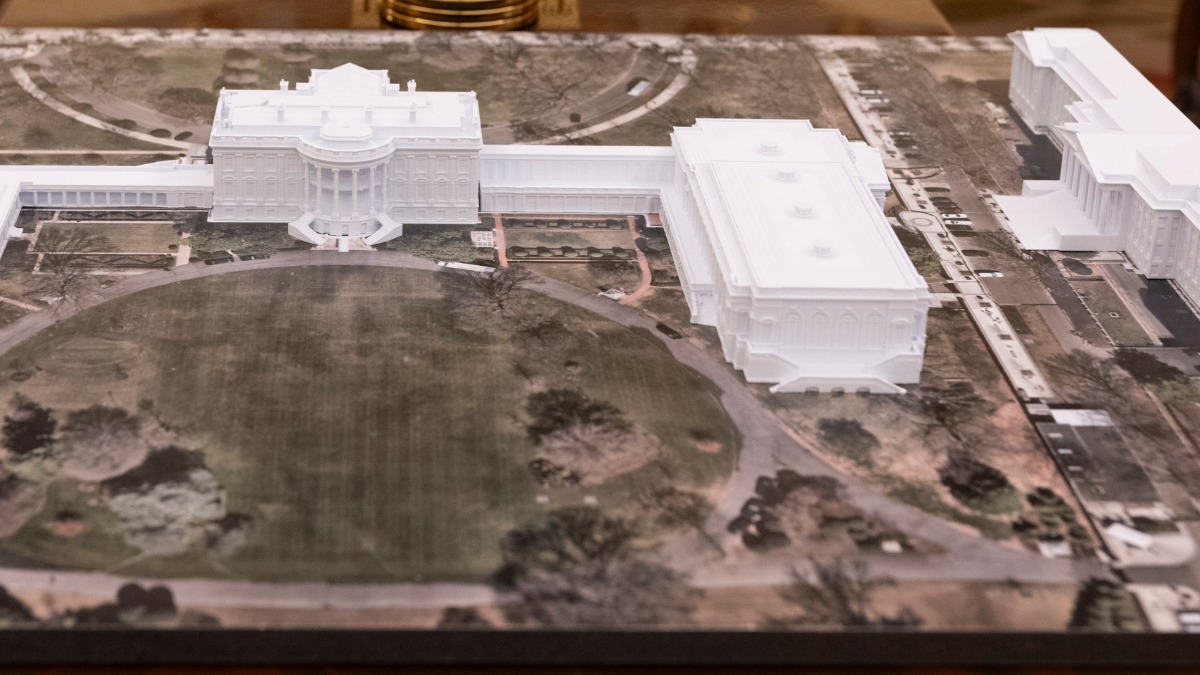
The conflict centers on the massive East Wing makeover, which involves replacing the historic wing with a nearly 90,000-square-foot ballroom. It has faced significant pushback from the National Trust for Historic Preservation. The Trust sued the White House, arguing that the project lacked the necessary congressional approval and failed to follow required procedures, such as environmental assessments and planning commission filings.
U.S. District Judge Richard Leon, who initially ordered the work to stop, was quite firm in his assessment. He noted that the president is a steward of the White House, not its owner, and ruled that Congress must bless the project before it can move forward. He even went as far as to describe the large excavation site next to the residence as a problem of the president’s own making, dismissing the administration’s security concerns as an attempt to grasp at straws.
Most of the problems this year have been of the President’s making
However, the administration’s legal team, led by Justice Department lawyer Brantley Mayers, is doubling down on the security argument. In court filings, they insisted that the project is not merely cosmetic. According to these filings, the new structure will feature missile-resistant steel columns, drone-proof roofing, and specialized glass designed to be bullet, ballistic, and blast-proof.
Furthermore, the ballroom is intended to house top-secret military installations, medical facilities, and bomb shelters. Mayers stated that the upgrades are essential to protecting the president and the White House itself, and that the entire project flows from those security needs.
Yeah, I thought that until he put his name on money, checks, the gaudy Oval Office and promenade, the oversized ballroom. It’s just weird and all about him. Then telling us as president to buy Trump cologne, watches, and tweeting stock symbols. Like WTF.
— jerseymike (@jerseymike01) April 12, 2026
This is not the guy I…
The ballroom is designed to sit directly atop a new Presidential Emergency Operations Center, or PEOC. This bunker has a long history, dating back to World War II when it was first built to protect Franklin D. Roosevelt. The administration has even referred to the ballroom itself as essentially a shed for the critical infrastructure being built underneath it.
One security expert noted, “Every time you publicly disclose the specific materials, methods, and capabilities being used to protect a facility like the White House, you increase the risk that adversaries can study those defenses,” she said, stating that Trump’s comments have already increased exposure. From a security standpoint, the less the world knows about how you’re hardening a target of this significance, the better,” she added.
when @realDonaldTrump is so #scared of the #American #people, that he #barricades himself in the @WhiteHouse so he can feel #safe….
— Osteoporosasaur (@osteoporosasaur) April 10, 2026
White House calls Trump ballroom a national security necessity that's 'vital' to the first family's safety https://t.co/yfsIcfkUFh pic.twitter.com/nUmJa1DNys
On the other hand, former Secret Service agent Paul Eckloff suggested that the information shared in court filings does not necessarily rise to the level of a genuine operational security breach. Still, he acknowledged that having an active construction site on the White House grounds does complicate the general security posture that the Secret Service has to manage.
The appeals court has now asked Judge Leon to clarify the security exception he originally carved out of his order. The administration maintains that its ability to protect the First Family is currently hampered by the unfinished construction work. Meanwhile, the National Trust remains committed to its goal of ensuring that historic sites are protected through proper consultation and legal compliance.
Trump’s economy is crushing hard working Americans. But I’m sure this man is really happy about $4 gas and the new ballroom.
— Witless Protection (@petergarber5) April 12, 2026
Whether or not you believe a 90,000-square-foot event space is the right way to house a modern emergency center, the legal arguments are clearly focused on the balance between executive authority and congressional oversight. As the case moves forward, the primary question remains whether the administration can successfully prove that the entire ballroom project is a national security necessity rather than just an expansive renovation.