Your say: week beginning October 5 Every day, we publish a selection of your emails in our newsletter. We’d love to hear from you, you can email us at [email protected]. The Conversation · Oct 4
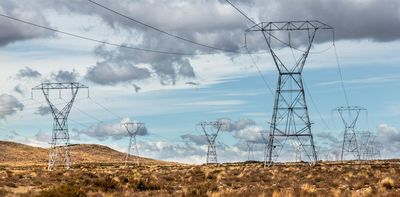
Breaking up NZ’s power gentailers sounds appealing. The consequences may not be In an election centred on New Zealand’s cost-of-living crisis, it’s perhaps unsurprising to see parties return to a familiar idea for tackling rising power bills: breaking up the big electricity gentailers. The Conversation · Oct 4
The same satellite can have military and civilian functions. This creates a dilemma for NZ As last week’s Aerospace Summit in Christchurch made clear, New Zealand is rapidly developing capabilities and partnerships in a sector estimated to be worth NZ$2.5 billion to the national economy. The Conversation · Oct 4
Aboriginal historian Barry Corr vividly investigates colonisation – but is less convincing on politics Surveying the Wild Abyss, by Aboriginal historian Barry Corr, is a history of colonial invasion of the Nepean–Hawkesbury rivers (“Dhurabang”) and the Sydney Plain they enclose. The Conversation · Oct 4
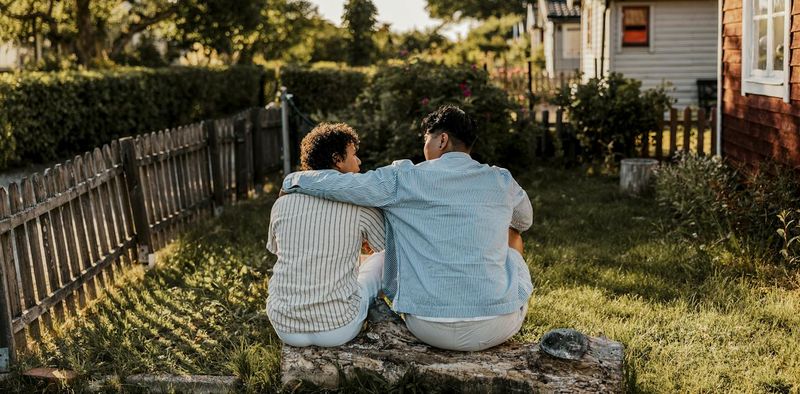
Friendships are important. Could (or should) they be legally recognised? We often hear about the importance of meaningful friendship to our lives – and the sense of belonging, recognition and care they provide. Yet, for the vast majority, friendships remain secondary to family and romantic relationships. The latter receive legal recognition, and have a higher social ranking than the former. The Conversation · Oct 4
A new study finds that to counter misinformation online, we need to copy its style Imagine you’re worried about vaccinating your baby. A message on Facebook tells you: “Protect the community and your kids by booking their vaccinations today.” Another asks: “Do you know all the effects of childhood vaccinations on your babies?” The Conversation · Oct 4
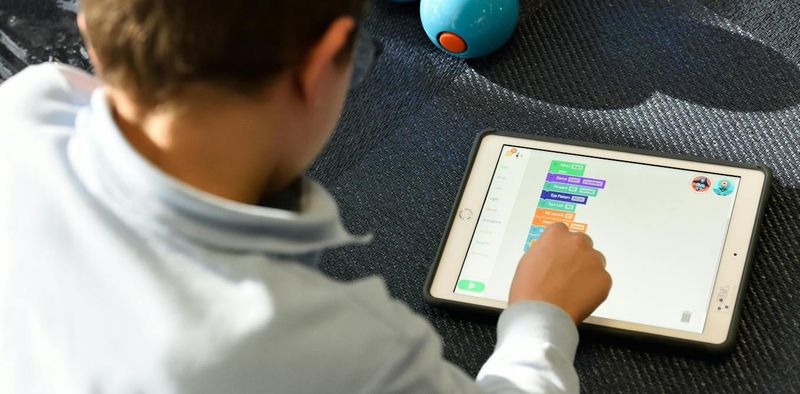
New research looks at how screens are actually being used in Australian classrooms – the results may surprise you There is a vigorous debate going on about screen use in Australian schools and how much and what kinds are good for learning. The Conversation · Oct 4
BYD is reshaping Australia’s car market. How did it get here? Since the Iran-US military conflict began earlier this year, disrupting global oil markets, Australia’s electric vehicle (EV) market has experienced an unprecedented boost. The Conversation · Oct 4
The disability royal commission laid bare violence, abuse and neglect. Three years on, what’s changed? Three years ago, the Royal Commission into Violence, Abuse, Neglect and Exploitation of People with Disability tabled its final report, a hefty 12 volumes and 222 recommendations. The Conversation · Oct 4
Making the most of city life for older people: 3 debunked mobility myths Old age is often associated with reliance on others, loss of independence and inactivity. But these simplistic notions mask the diversity of people’s experiences as they age, and can also lead to unsuitable policies and interventions — or even to explicit forms of ageism. The Conversation · Oct 4
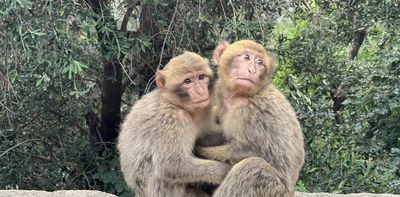
Protecting endangered species must include supporting habitats and nearby human settlements One of the hardest challenges in wildlife conservation arises when the habitat of a species in need of protection overlaps with land used by humans. Wolves and bears can kill livestock, elephants can damage homes and properties and wild boar can damage crops. The Conversation · Oct 4
The ‘dream job’ myth: Why a fulfilling career does not have to define your life At some point, most of us have heard the same advice about work: find a job you love, and you’ll never work a day in your life. The Conversation · Oct 4
Here’s how scientists aim to speed up drug development for treating new viruses When the COVID-19 pandemic hit, one of the first medicines doctors turned to was remdesivir, part of a family of medicines called nucleoside analogues that are also used to treat HIV, hepatitis and some cancers. The Conversation · Oct 4
Africa’s new credit agency: why it’s about a lot more than just ratings The new Africa Credit Rating Agency (AfCRA) has already generated an important debate. Some analysts have portrayed it as a rival to the three established global rating agencies – Fitch, Moody’s and S&P Global. Others have questioned whether Africa needs another rating agency at all. The Conversation · Oct 4
The Conversation · Oct 4 Africa’s new credit agency: why it’s needed The formal launch of the Africa Credit Rating Agency (AfCRA) has required considerable institutional commitment. It brings to fruition an effort that has been almost a decade in the making.
The Conversation · Oct 3 Hunter-gatherer societies are often put on a pedestal as paragons of equality – but the reality is more complicated On the shores of Lake Eyasi in Northern Tanzania, a small number of people still hunt and gather their food. Today a Hadza hunter has taken down an animal – a kudu. He can’t carry it by himself, so he cuts his poisoned arrow from its flank, covers the carcass…
The Conversation · Oct 3 Attention can’t be bought, so brands turn to memes The funniest post you saw this week may not have come from a friend; it may have come from a brand. Whether it is Kohl’s, Wendy’s, or Netflix, brands are behaving more like internet users than traditional advertisers.
The Conversation · Oct 2 Brazil’s future depends on science Brazil’s future depends on science, a key area for strengthening policies and ensuring the country’s sovereignty in the face of new challenges. However, an analysis by the Brazilian Academy of Sciences (ABC), based on the organization’s assessments and proposals over the past four election cycles, shows that we still have…
The Conversation · Oct 2 Faith, rhetoric and the ballot box: How religion has shaped Brazil’s current presidential election In the last few days before the 2026 elections, Flávio Bolsonaro and Luiz Inácio Lula da Silva — Brazil’s two leading presidential candidates — were embroiled in controversies centered on the same issue: religion.
The Conversation · Oct 2 Beyond hacking: How foreign governments can exploit vulnerabilities to manipulate elections A recent report by the Brazilian Intelligence Agency (ABIN) pointed to the possibility of direct interference by the United States in the upcoming Brazilian elections, the first round of which will take place on Oct 4, 2026. According to the document the U.S. government, in an effort to curb China’s…
The Conversation · Oct 2 Cornell 7 case puts a spotlight on fraternity misconduct – and the limits of universities’ power to stop it Universities have been trying for years to cut back on the abuses among fraternities, with limited resources and limited success.
The Conversation · Oct 2 Secret chambers in Tutankhamun’s tomb could hold the burial of a lost Egyptian queen – we may get answers soon A growing body of research is generating renewed interest in potential hidden spaces beyond the decorated walls of Tutankhamun’s burial chamber in Egypt.
The Conversation · Oct 2 Plans to tamper with the pension triple lock might not be as dangerous for Labour as some believe When Prime Minister Andy Burnham told the Labour conference that he is going to change the state pension’s triple lock mechanism, the backlash was immediate. For 15 years, the triple lock has been one of the few genuinely untouchable policies in British politics.
The Conversation · Oct 2 Burnham has said the unsayable on Brexit. What happens now? Andy Burnham’s revelation that he was prepared “to go all the way” in terms of the UK’s relationship with the EU came as a shock to many. While a commitment to rejoining the EU in the next Labour manifesto is far from a given – and the prime minister’s language…