Newcomers to Canada are supportive of Indigenous Peoples and reconciliation Public education about Canada’s treatment of Indigenous Peoples is an important component of the process of reconciliation. The Conversation · Jun 20, 2022

Ontario's child-care agreement is poised to fail low-income children and families Many parents, economists and and child-care advocates celebrated the signing of Ontario’s early learning and child-care agreement with the federal government at the end of March. The Conversation · Jun 20, 2022
How the slow-burning housing crisis is driving hunger in Canada Canada’s housing crisis is constantly in the news: sky-high prices, mixed with high levels of inflation and household debt, is a recipe for disaster. Inflation is also impacting food prices, and as wages remain stagnant food insecurity appears to be on the rise. The Conversation · Jun 20, 2022
Ontario must commit to affordable housing for all, not attainable housing During his provincial election victory speech on June 2, Ontario Premier Doug Ford said he aimed to build more housing to make the housing market more “attainable” for everyone. The Conversation · Jun 19, 2022
3 challenges facing the Ontario NDP as it tries to win more support The results of the 2022 Ontario provincial election were a devastating setback for the New Democrats, involving a loss of votes, seats and support among important demographic groups. The Conversation · Jun 19, 2022
The Toronto police apology for its treatment of racialized people is meaningless without action The newly released findings on race-based data of the Toronto Police Service offers another grim reminder of the realities of law enforcement in Canada. The 119-page document, titled Race Identity Based Data Collection Strategy Understanding: Use of Force Strip Searches in 2020, explores 7,114 strip searches and 949 incidents involving… The Conversation · Jun 19, 2022
Decriminalizing hard drugs in B.C. follows decades of public health advocacy British Columbia has become the first province to be granted an exemption under the Controlled Drugs and Substances Act to remove criminal penalties for possession of opioids, cocaine, methamphetamine and MDMA for personal use. The Conversation · Jun 19, 2022
Strip searches are ineffective, unnecessary and target racialized Canadians With the Toronto Police Service’s release of race-based data on strip searches as part of its Race and Identity-based Data Collection Strategy, we can clearly see who it chooses to subject to strip searches. The Conversation · Jun 16, 2022
Building bridges between scientific and Indigenous knowledge Editor’s note: This story is part of a series that includes live interviews with some of Canada’s top social sciences and humanities academics. It is co-sponsored by The Conversation and the Social Sciences and Humanities Research Council. Check back later for the video recording of the interview. The Conversation · Jun 15, 2022
Canada shouldn't be smug about gun violence — it's a growing problem here, too The Canadian government has tabled new legislation to strengthen the screening process of individual firearm owners, institute a mandatory buyback of banned semi-automatic military style firearms and to ban the sale, import and transfer of handguns. The Conversation · Jun 15, 2022
Why New Zealand is right to call out Canada on its dairy industry When it comes to dairy and free trade, Canada wants it both ways. New Zealand’s dairy dispute with Canada reveals the ongoing tensions within Canada’s trade agenda. The Conversation · Jun 12, 2022
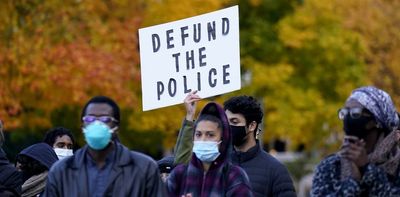
Thin-skinned blue line: Police fight against defunding, showing their true colours Since the police killing of George Floyd in May 2020 and the subsequent mass mobilizations for police defunding and abolition, the defund movement has continued to organize. The Conversation · Jun 9, 2022
Adapting to life with COVID-19: Lessons our own immune system can teach us about public health information The last of Ontario’s COVID-19 mask mandates — which have still been in effect in settings like hospitals and public transit — are scheduled to expire on June 11. While border protocols, such as random testing, have been extended at least until the end of June, long lineups at Toronto’s… The Conversation · Jun 9, 2022
Challenging the whiteness of queer organizations Pride parades were established to commemorate the strife experienced by gay men, lesbians, bisexuals and trans people at the 1969 Stonewall Riots in New York City’s West Village. Parades worked their way into Canada to help celebrate queer life across two-spirit, lesbian, gay, bisexual, trans, queer, intersex and asexual (2SLGBTQIA+)… The Conversation · Jun 8, 2022
The Conversation · Jun 8, 2022 Diamond mines are not a girl’s best friend — Podcast When you think diamonds, you probably think of romance, weddings and Valentine’s Day. And it’s no accident we think this way: A century of marketing has convinced us that diamonds symbolize love.
The Conversation · Jun 6, 2022 Collectivism — not individualism — is the path to reducing social and economic inequality Last month, two large demonstrations took place in Ontario: the Rolling Thunder biker rally in Ottawa and a series of rallies across Ontario organized by the Ontario Federation of Labour.
The Conversation · Jun 3, 2022 The Ontario election campaign produced some surprisingly good ideas for Canada No big ideas during an election campaign? Au contraire — the Ontario election campaign produced some unexpected and innovative proposals.
The Conversation · Jun 3, 2022 Ontario election: Doug Ford's victory shows he's not the polarizing figure he once was Doug Ford has won a larger majority government in Ontario, a victory that serves as a reminder that the Progressive Conservative party ruled Ontario for much of the 20th century.
The Conversation · Jun 2, 2022 Imprisoned citizens face barriers to voting in Ontario Many Ontario citizens faced barriers to voting in the June 2 general election. In a process known as disenfranchisement by process, thousands of imprisoned persons in Ontario experience obstacles to voting. Many will also be explicitly barred from voting in the upcoming municipal elections in October.
The Conversation · Jun 1, 2022 To prevent disasters like Lac-Mégantic, private interests cannot be allowed to affect regulations On July 6, 2013, the fourth deadliest railway disaster in Canadian history took place. A train hauling 72 tankers filled with crude oil derailed in Lac-Mégantic, Que., killing 47 people.
The Conversation · May 31, 2022 After Ontario's COVID-19 school closures, a responsive recovery plan is critical Three years into the pandemic, it’s clear that Canada’s provinces have been hampered by a lack of a comparative cross-Canada analysis of school closures and the effects on students.
The Conversation · May 31, 2022 Calls for ‘ethical oil’ are pushing Canada to become a petro-state Russia’s ongoing invasion of Ukraine has brought fossil fuels and geopolitics to the forefront of public discussion. In an effort to evade economic sanctions, Russia has weaponized its energy exports.
The Conversation · May 30, 2022 More long-term care beds in Ontario won't help without well-paid, well-trained staff Days away from the Ontario election, with health care a top issue, what are the three major parties’ proposals for fixing Ontario’s chronic long-term care problems?
The Conversation · May 29, 2022 Overturning Roe v. Wade would have wide-reaching implications beyond U.S. borders After after a U.S. Supreme Court opinion indicating Roe v. Wade could be overturned was leaked earlier this month, there has been a lot of discussion about how it will impact Americans. But this will also have wide-reaching implications outside of the United States.
The Conversation · May 26, 2022 Ontario election gives voters the chance to choose people over profits in long-term care In the wake of the COVID-19 pandemic, there’s a once-in-a-generation opportunity to correct how public funds will be allocated for long-term care in Ontario. The choice is between more profits for shareholders or reinvestment in care for seniors and improved working conditions for employees.