Do the microbes in your gut influence what foods you like? Can the microbes in your gut influence the foods you crave? LiveScience · Apr 11
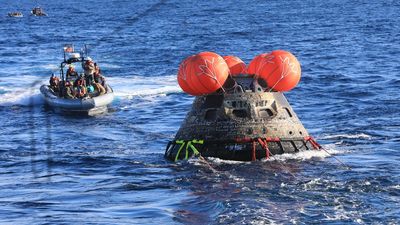
There are 'reasons to be confident' about faulty Artemis II heat shield ahead of 25,000 mph reentry, space expert Ed Macaulay says NASA's Artemis II heat shield is about to face its ultimate test as the Orion crew prepares for reentry. Physics and data science lecturer Ed Macaulay tells Live Science reasons to be confident ahead of today's historic splashdown. LiveScience · Apr 10
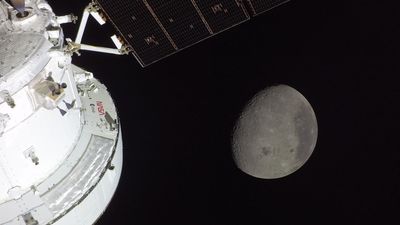
The moon is green and brown? Why scientists are already excited about Artemis II's historic lunar photos As Earth reels at the beauty of Artemis II's historic lunar flyby photos, geologists working on the mission are excited for big insights about the moon. LiveScience · Apr 10
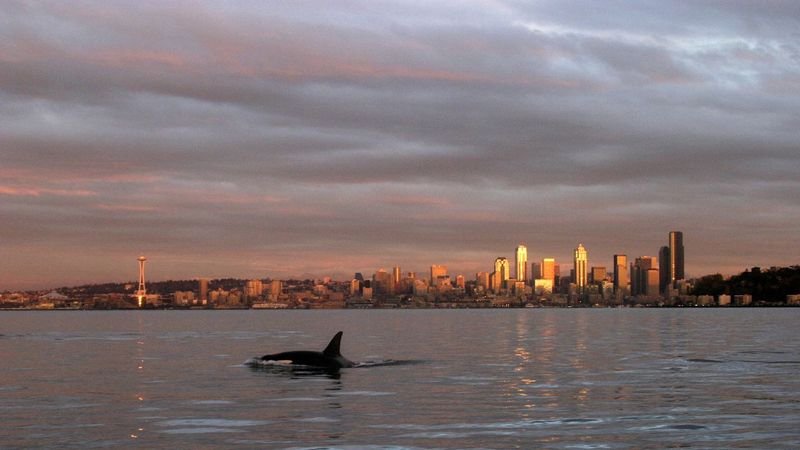
'More questions than answers': Experts baffled by Alaskan mammal-eating orcas spotted near Seattle Three orcas from Alaska surfaced in the waters between Washington state and Canada in March, an area where they've never been documented. LiveScience · Apr 10
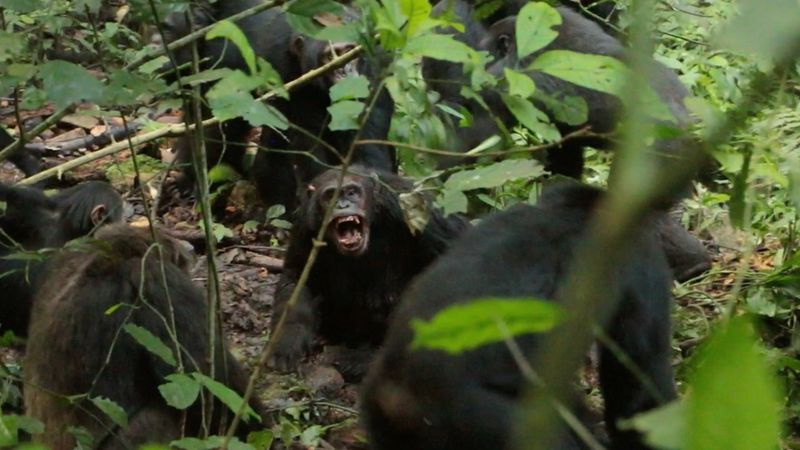
Chimpanzees in Uganda are locked in a deadly 'civil war' after their group split apart — and scientists don't know why The first well-observed "civil war" in wild chimpanzees reveals that shifting social ties alone can fracture a group, igniting deadly conflict between former friends. LiveScience · Apr 9
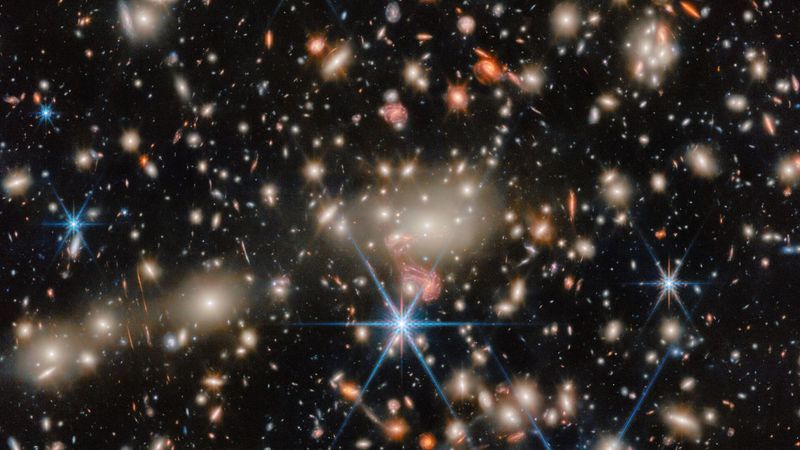
James Webb telescope spots 'stingray' galaxy system that could solve the mystery of 'little red dots' A study of the fascinating galaxy system nicknamed "The Stingray" suggests that mysterious little red dots could be a phase in the evolution of galaxies powered by actively feeding black holes, rather than a distinct class of objects. LiveScience · Apr 9
There's an issue with the Artemis II heat shield, but NASA isn't worried. Here's why. The Artemis II astronauts are about to fall to Earth at the fastest speed humans have ever travelled inside a spacecraft with a compromised heat shield. But NASA remains confident they will be safe. LiveScience · Apr 9
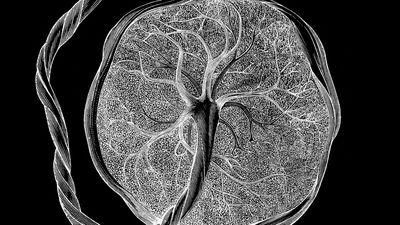
'No one knows what they are': Researchers discover new type of cell that's seen only during pregnancy A new map of the "maternal-fetal interface" reveals a new type of cell, as well as the types of cells most likely to be affected in conditions like preeclampsia. LiveScience · Apr 8
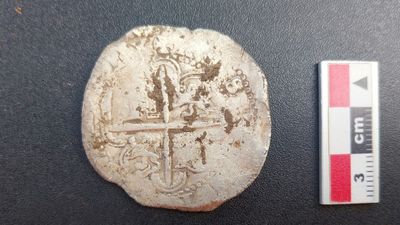
16th-century silver coin discovered near Strait of Magellan marks the spot of a doomed Spanish colony The newfound coin dates to the 1584 founding of a doomed Spanish settlement in southern Chile. LiveScience · Apr 8
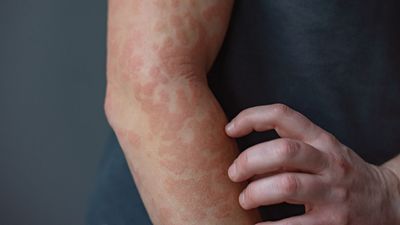
Keratin may act as a 'brake' for skin inflammation, pointing to potential treatments Keratin has been linked to skin diseases and inflammation in the past, but now, a new study may have uncovered one reason why. LiveScience · Apr 8
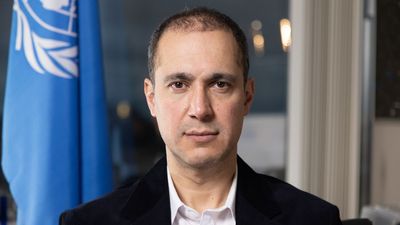
'In every continent where humans are present, water bankruptcy is manifesting itself': Exiled Iranian scientist Kaveh Madani on our desperate need to preserve our most precious resource Live Science spoke with Kaveh Madani, director of the UN University Institute for Water, Environment and Health and recipient of the 2026 Stockholm Water Prize, about "water bankruptcy" and what countries should do to avoid catastrophe. LiveScience · Apr 8
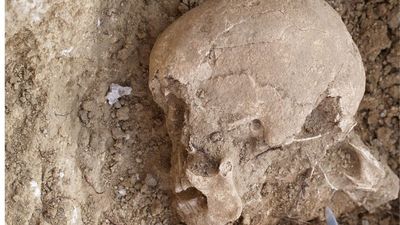
DNA reveals ancestry of man buried in Stone Age monument in Spain, but his religion remains a mystery In the Middle Ages, a man was buried in a Stone Age monument in what is now Spain. Now, we finally know his genetic roots, but his religious beliefs are still a mystery. LiveScience · Apr 7
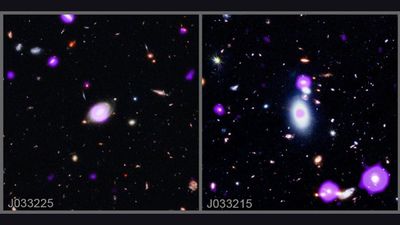
The hungriest black holes in the universe are running out of food, survey of 8,000 cosmic monsters reveals Astronomers studied 1.3 million galaxies and 8,000 X-ray-spewing supermassive black holes to find out why these gravitational monsters are growing more slowly than ever. LiveScience · Apr 6
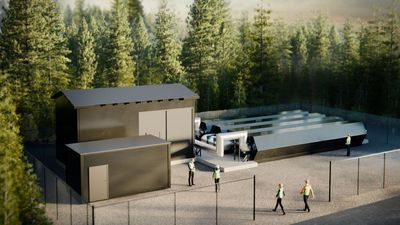
We went to Finland to hear about the new 'sand battery' that will turn stored renewable energy back into power for the electrical grid Engineers are testing a new "sand battery" that could power industries and communities using stored renewable energy. LiveScience · Apr 6
LiveScience · Apr 5 Shroud of Turin, claimed to be Jesus' burial cloth, contaminated with carrot and red coral DNA An analysis of samples taken from the Shroud of Turin, the cloth thought by some to have been wrapped around Jesus, reveals a rich tapestry of animal and plant DNA. But what does it mean?
LiveScience · Apr 5 What happened to the Minoan civilization? The Minoan civilization flourished between roughly 2000 and 1500 B.C. on Crete and nearby islands. How did it come to an end?
LiveScience · Apr 4 Cheap, decades-old transplant drug delays full onset of type 1 diabetes A transplant drug that has been used for decades can preserve the function of insulin-producing cells in young children who are newly diagnosed with type 1 diabetes.
LiveScience · Apr 4 Science news this week: Artemis II lifts off, diabetes cured in mice, and smog in China shapes Arctic storms April 4, 2026: Our weekly roundup of the latest science in the news, as well as a few fascinating articles to keep you entertained over the weekend.
LiveScience · Apr 4 Are allergies genetic? Although babies born from parents with allergies are also more likely to have them, there are a number of outside factors that affect whether and how someone develops allergies.
LiveScience · Apr 3 Homo habilis is the earliest named human. But is it even human? Between 2 million and 3 million years ago, humans appeared in Africa — but identifying them in the fossil record is turning out to be surprisingly difficult.
LiveScience · Apr 3 Scientists mapped all the nerves of the clitoris for the first time High-resolution X-ray offers a new look at an understudied organ: the clitoris.
LiveScience · Apr 2 Ancient children's teeth reveal a syphilis-like disease was spreading in Vietnam 4,000 years ago Remains from three Stone Age children in Vietnam may challenge long-standing ideas about the origin of syphilis, scientists say.
LiveScience · Apr 2 Chemists make hydrogen from breadcrumbs in groundbreaking reaction that could replace some fossil fuels Chemists say they’ve found a way to turn breadcrumbs into hydrogen, potentially offering a sustainable alternative to one of the most common chemical manufacturing processes.
LiveScience · Apr 2 Earth's energy imbalance is much more extreme than climate models show — but scientists aren't sure why For reasons that are still unclear, climate models underestimate the growing gap between the amount of energy Earth receives from the sun and the amount the planet radiates into space.
LiveScience · Apr 2 Chinese satellite with robotic 'octopus arm' passes key refueling test in orbit — making longer-lived space assets more likely The experimental Hukeda-2 satellite and its highly flexible robotic arm have passed a major refuelling test in low Earth orbit. The demonstration is the latest step toward China significantly expanding the longevity of its spacecraft.






 LiveScience
 The Economic Times
 Medical Daily
 International Business Times UK
 The Times of India
 Bored Panda
 International Business Times
 TechRadar
