Pennsylvania woman finds antique paperweight at Delaware beach. Then she cleans off the rust and brings every emergency service to her door "You used the magic words on your 911 call.” We Got This Covered · Oct 6
Proton Therapy Did Not Help Advanced Liver Cancer Patients Live Longer Than Standard Radiation in Phase 3 Trial In the Phase 3 NRG-GI003 trial, proton therapy did not extend survival over standard radiation in advanced liver cancer. Here is what patients should ask. Medical Daily · Oct 1
Five Radiation Sessions Before Pancreatic Cancer Surgery Preserved Physical Function, but Survival Was Numerically Lower in Small Trial Five radiation sessions before pancreatic cancer surgery eased fatigue in a trial, but survival was lower and not yet established. What patients should ask. Medical Daily · Sep 30
Farmer left $10.9m for cancer centre; Mayo could get it if hospital lost independence Iowa farmer Herman Carl Stille died in September 2020 at 94, leaving an estate worth about $10.9 million. His 2017 will directed the remainder to Floyd County Medical Center (FCMC) in Charles City to establish a cancer centre for local residents. It also named the Mayo Foundation as the alternative… The Times of India · Sep 30
First Phase 3 Trial Links Radiosurgery to Longer Survival When Small Cell Lung Cancer Spreads to the Brain A phase 3 trial linked radiosurgery to longer survival in small-cell lung cancer that spread to the brain, but only as a secondary finding. Medical Daily · Sep 30
Five-Session Prostate Radiation and Surgery Showed Similar Eight-Year Cancer Control in a Small 123-Patient British Trial In the PACE-A trial, five-session radiation and prostate surgery showed no significant 8-year difference in cancer control. What men should know. Medical Daily · Sep 30
Men Weighing Prostate Cancer Radiation Could Eventually See Genetic Testing Guide Choices to Limit Urinary Side Effects A genetic test flagged prostate cancer patients as being at higher risk of lasting urinary side effects after SBRT. What men should ask a radiation oncologist. Medical Daily · Sep 29
Splitting Brain Radiosurgery into Three to Five Sessions After Tumor Removal Lowered Recurrence in 242-Patient Trial A 242-patient phase 3 trial found that split-dose radiosurgery after brain tumor surgery reduced recurrence. The results come from a conference talk. Medical Daily · Sep 29
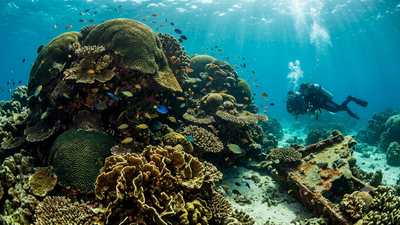
Giant corals found thriving where 23 US nuclear tests once shook Bikini Atoll Between 1946 and 1958, the United States detonated 23 nuclear devices at Bikini Atoll, forcing residents from their homes and leaving lasting radioactive contamination. Decades later, marine biologists found fish, sharks and large coral colonies thriving in the lagoon. Some corals appeared to have begun growing roughly a decade after… The Times of India · Sep 29
Fewer Than 3 in 10 Breast Cancer Patients Under 65 Stayed on Hormone Therapy for All Five Years About 28% of breast cancer patients under 65 stayed on hormone therapy for five years after lumpectomy, an ASTRO 2026 insurance claims analysis found. Medical Daily · Sep 28
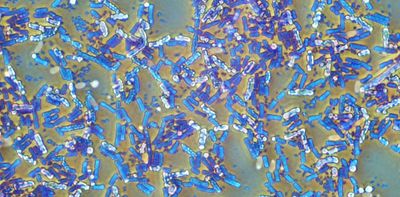
Hibernating bacteria can invade hospitals and survive outer space – but their high energy bill is a weakness that scientists can strike A spore is a bacterium’s survival capsule: dried almost solid, wrapped in protein armor and chemical processes shut down. Bacteria enter this state of hibernation when environmental conditions are unfavorable. What’s left is close to indestructible: It can survive boiling, desiccation, radiation and the vacuum of space. NASA once bolted… The Conversation · Sep 28
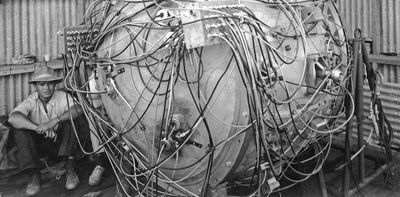
AI companies could learn safety lessons from the history of nuclear weapons An AI model built by US tech company OpenAI has hacked into the Australian government healthcare portal, Medicare. The news, which emerged on September 23, follows a string of similar incidents reported over the summer by OpenAI and its main rival, Anthropic. The Conversation · Sep 28
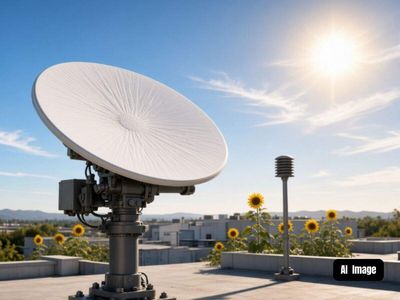
Sunflower-like AC: Chinese scientists develop a cooling system that follows Sun and provides 135% higher cooling during hot noon. Here's how it works Chinese scientists built sunflower-like AC: Researchers in China have developed a sunflower-inspired radiative cooling system that changes its orientation with the Sun to reduce direct solar heating while continuing to radiate heat toward the sky. The system, called dynamic sky view factor steering (DSVFS), delivered 135% higher cooling flux at… The Economic Times · Sep 28
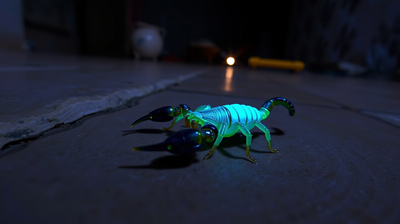
Scorpions in Indian Homes Glow Under Ultraviolet Light, Here Is Why and Which Species Are Venomous The Glow Is in the Exoskeleton, Not the VenomShine a UV torch on any scorpion and it lights up blue-green in the dark. The source is a set of beta-carboline compounds and coumarins embedded in the hyaline layer of the scorpion's cuticle, the thin, hard outer shell beneath the waxy… Times Life · Sep 27
The Conversation · Sep 25 An overlooked era of cosmology is stealing the show in the quest to understand the cosmos Could you imagine if pagers made a comeback? Sure, your smartphone would still be your notepad-flashlight-camera-personal assistant-MP3 player-wallet-social media browser. But imagine if pagers made it so easy to do that one important thing – pinging your friends and associates – that we all brought them back into our lives,…
Medical Daily · Sep 25 Theranostics Programs Expand at Mayo Clinic, MD Anderson, and Other Centers, but Approved Uses Still Cover Few Cancers Health systems are expanding theranostics, which pairs a scan with targeted radiation. Which cancers is it approved for, and who may qualify?
The Independent UK · Sep 25 What long-haul flights are really doing to your body TRAVEL INSIDER: From jet lag to DVT to radiation exposure, frequent flying comes with a long list of health warnings, but how many are actually worth worrying about? Global Travel Editor Annabel Grossman asked a doctor for the real risks in the latest Travel Insider newsletter
Times Life · Sep 24 Why Clay Idols Dissolve at Different Rates: The Sediment and Oxygen Evidence From Immersion Sites Clay is not one materialThe word "clay" covers a family of minerals with very different structures. Idol makers across India work primarily with two: natural river clay, which is largely kaolinite, and processed clay bodies that contain montmorillonite (the dominant mineral in what potters call "black cotton soil"). Kaolinite has…
Medical Daily · Sep 23 An Immunotherapy Drug Is Letting Some Rectal Cancer Patients Skip Surgery: An Oncologist Explains Who It Could Help Dostarlimab cleared tumors in every rectal cancer patient who completed treatment in a landmark study, and the FDA is now reviewing it for this use. But the approach works for only a small, specific group of patients, and long-term answers are still coming.
The Economic Times · Sep 21 No signal underground: Scientists challenge a decades-old idea about how quantum reality breaks down. Schrödinger’s cat has a new problem A deep-underground experiment in Italy has challenged a decades-old theory that gravity may destroy quantum superpositions. After 62 days of measurements at Gran Sasso, researchers found no trace of the faint radiation predicted by the model. The result does not explain why quantum behavior fades in everyday objects, but it…
The Economic Times · Sep 21 Stephen Hawking's quote of the day on guilt: 'The human capacity for guilt is such that people can always...' Stephen Hawking, an extraordinary theoretical physicist, delved into the enigmas of the cosmos. His groundbreaking work on black holes and Hawking radiation reshaped our understanding of the universe. The immensely popular book 'A Brief History of Time' bridged the gap between advanced science and public knowledge. Despite his physical challenges,…
Times Life · Sep 21 How the Malabar Pit Viper Uses Infrared Sensing to Hunt in Total Darkness in the Ghats A Face Built for the DarkBetween the Malabar pit viper's nostril and its eye, on each side of its head, sits a small depression called the loreal pit. It looks unremarkable. It is anything but. This pit is a heat-detection organ, lined with a membrane packed with temperature-sensitive receptors that…
The Economic Times · Sep 20 NASA sent seeds into space for nearly 6 years; after they returned, 132,000 experiment kits reached 3.3 million students in 30 countries In April 1984, NASA launched a satellite carrying 12.5 million tomato seeds into orbit to test how space radiation affects biological life. The mission was originally scheduled to last a single year. However, the tragic loss of the Space Shuttle Challenger grounded the fleet and stranded the payload in space.…
Times Life · Sep 20 How to Wash Indian Clothes So the Colour Survives: The Right Detergent, Water and Sun Why Indian Fabrics Lose Colour Faster Than You ThinkMost Indian fabrics, chanderi, cotton khadi, silk, bandhani, block-printed cotton, are dyed with reactive or natural dyes that bond well to fibre but are genuinely sensitive to alkaline conditions. Standard detergents sold in India, particularly powder detergents, are highly alkaline, with a…
Medical Daily · Sep 17 Neuroendocrine Tumor Patients Gain a Second Lutetium Dotatate Option as FDA Approves Curium's Bexlutry Radioligand Injection The FDA approved Curium's Bexlutry, a second lutetium Lu 177 dotatate therapy for adults with SSTR-positive GEP-NETs. Here is what it means for access.













 Space
 The Independent UK
 The Economic Times
 Medical Daily
 The Conversation
 The Times of India
 Times Life
 International Business Times UK
 LiveScience
 MyLifeXP
 Euronews
 International Business Times
