The powerful new Rubin Observatory just found 11,000 new asteroids and measured 'tens of thousands more' This offers us a glimpse of the discovery surge scientists expect to occur once full operations begin. Space · Apr 5
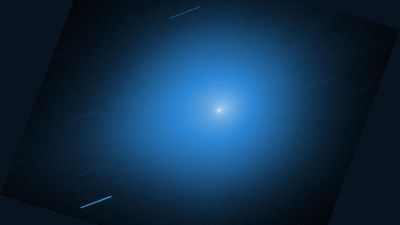
Interstellar comet 3I/ATLAS may be nearly 12 billion years old — so ancient its star system may no longer exist Our solar system's famous "invader" might be as old as the Milky Way itself. Space · Mar 30
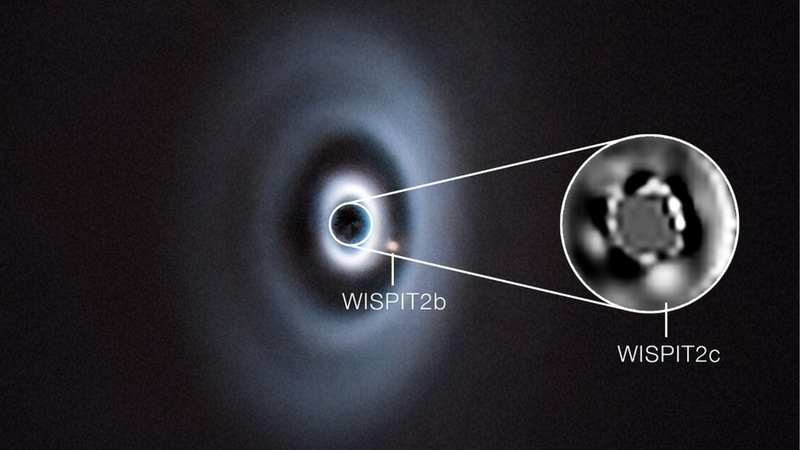
Astronomers have spotted two giant gas plants forming around a baby star in deep space Using the European Southern Observatory’s Very Large Telescope, a team of scientists have observed two giant gas planets forming around a young star in what appears to be a new, emerging solar system. Euronews · Mar 25
Scientists discover mirror of our solar system in 2 exoplanets forming around a star Astronomers have spotted two planets forming around a distant infant star, offering a time capsule into see what the solar system looked like billions of years ago. Space · Mar 24
New 3I/ATLAS Origin Study Suggests It Formed In a Much Colder Plantery System Than Ours Astronomers reveal that most of the water from interstellar comet 3I/ATLAS came from icy grains in its surrounding cloud, not its nucleus, suggesting it formed in a much colder star system International Business Times UK · Mar 24
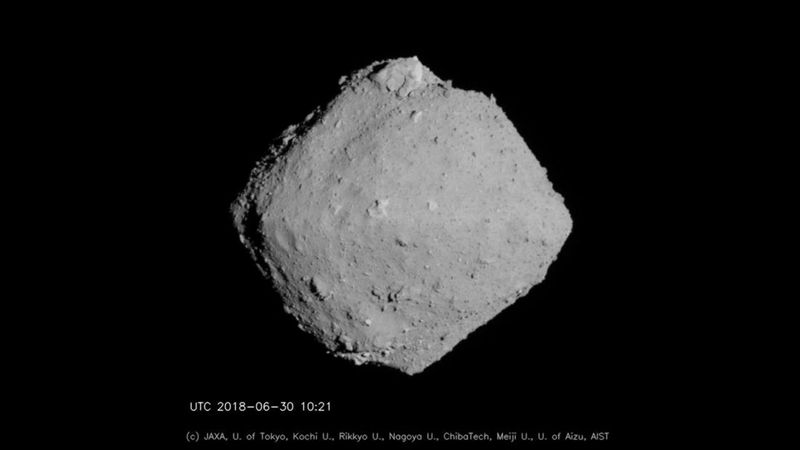
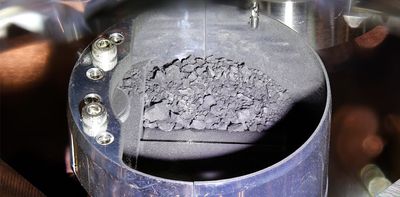
All 5 'letters' of DNA found on an asteroid speeding through our solar system. What do they tell us about the origins of life? JAXA samples reveal that asteroid Ryugu has a complete set of nucleobases, the building blocks of DNA, suggesting these ingredients of life may be common in the solar system. LiveScience · Mar 19
Project Hail Mary is packed with hard science. An astrophysicist breaks it down As an astrophysicist, my world revolves around the wonders of space and the mysteries of the universe. This means I can be a tough critic of science fiction books and films that explore these topics. The Conversation · Mar 18
All 5 fundamental units of life’s genetic code were just discovered in an asteroid sample A new study reveals all five fundamental nucleobases – the molecular “letters” of life – have been detected in samples from the asteroid Ryugu. The Conversation · Mar 16
'Interstellar messenger' 3I/ATLAS could be nearly as old as the universe itself, James Webb telescope observations reveal The comet formed in a cold and distant part of the early Milky Way up to 12 billion years ago, potentially putting it just under 2 billion years the age of the universe. LiveScience · Mar 12
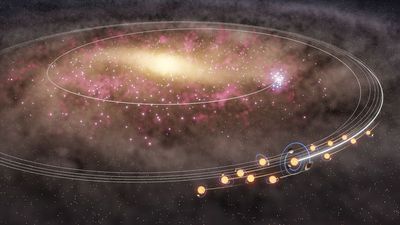
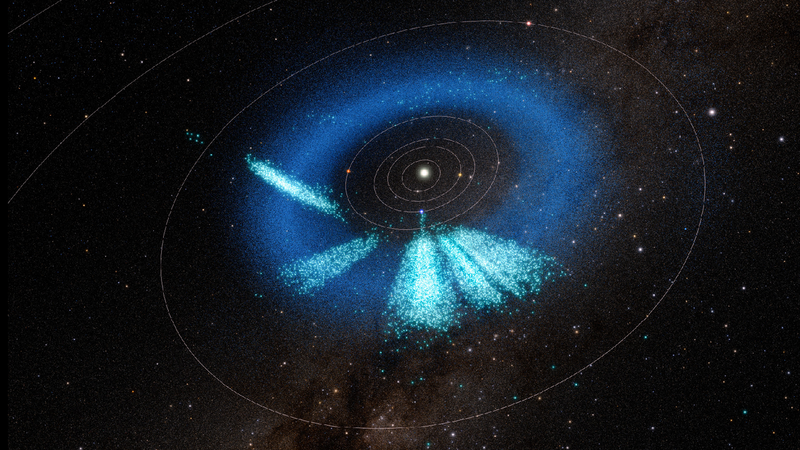
A mass stellar migration billions of years ago may have helped life get started on Earth Our sun and a host of "solar twins" may have migrated away from the core of the Milky Way galaxy together long ago, potentially making the solar system more hospitable to life. Space · Mar 12
A 'mass migration' of stars from the Milky Way's center could explain why there's life in our solar system The Gaia telescope spotted more than 6,000 sunlike stars, all of which appear to have migrated from the galaxy's center more than 4 billion years ago. LiveScience · Mar 12
3I/ATLAS Update: Harvard Expert Claims 'Alien Spaceship' Is From Milky Way Disc Harvard astrophysicist Avi Loeb says interstellar comet 3I/ATLAS likely comes from the Milky Way's disc, as astronomers grapple with its bizarre chemistry and disputed age. International Business Times UK · Mar 11
Interstellar comet 3I/ATLAS is 'bursting with methanol,' new study finds The interstellar comet 3I/ATLAS is unusually rich in alcohol — a chemical clue that could reveal how planets and icy bodies form around other stars. Space · Mar 11
Scientists Find 'Alcohol' On Interstellar Comet 3I/ATLAS — What Does It Mean For Our Solar System? Scientists detect alcohol on interstellar comet 3I/ATLAS. The strange discovery could reveal secrets about alien solar systems and cosmic chemistry. International Business Times UK · Mar 10
The Conversation · Mar 6 How do we know what asteroids are made out of? Asteroids are some of the oldest objects in the Solar System: leftovers from the chaotic time when planets were assembling from dust and rock. They’re time capsules, preserving clues about what the early Solar System was like, and, ultimately, what the building blocks of planets are.
The Conversation · Mar 3 World’s biggest astronomy camera seeks to answer pressing questions about the universe The Vera C. Rubin Observatory has started releasing its first discoveries: including supernovae, variable stars and asteroids, which will from now on be discovered at an astonishing rate as it begins its Legacy Survey of Space and Time, a ten-year survey probing the deepest reaches of the universe.
International Business Times UK · Feb 28 3I/ATLAS Latest Update: ESA Scientists Probe Interstellar Comet For Clues To Alien Star Systems The European Space Agency's JUICE spacecraft has captured detailed images of the interstellar comet 3I/ATLAS, offering insights into alien star systems.
Space · Feb 26 Why are there so many 'space snowmen' in our solar system? New study offers clues In the distant reaches of the solar system are many icy objects that resemble snowmen. Now, a new study reveals the simple way in which these mysterious objects might form.
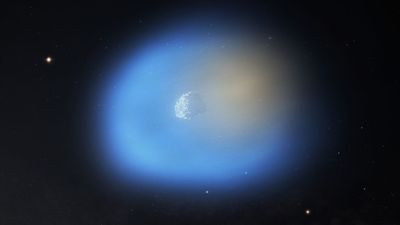
Space · Feb 24 NASA space telescope gets 1st clear X-ray image of sun-like star blowing a bubble The observations offer a rare glimpse into our solar system's early history.
International Business Times UK · Feb 23 Scientists Want to Catch 3I/ATLAS Before It Escapes the Solar System, But Mission Could Take 50 Years A new study outlines a potential mission to intercept interstellar comet 3I/ATLAS, but the journey could take decades due to its speed and distance.
The Guardian - UK · Feb 23 Starwatch: Jupiter shines steady in Gemini Solar system’s largest planet remains a brilliant, unwavering beacon, forming a striking trio with Castor and Pollux
Space · Feb 19 The James Webb Space Telescope just mapped auroras on Uranus in 3D for the 1st time, and scientists are thrilled "This is a crucial step towards characterizing giant planets beyond our solar system."
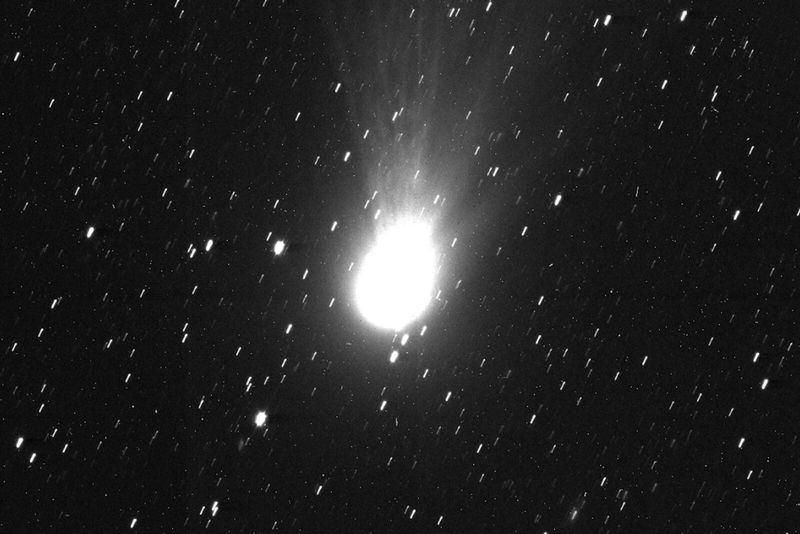
LiveScience · Feb 18 City-size, cold-volcano comet transforms into a glowing 'snail shell' after major explosive outburst Following a massive cryovolcanic eruption, the mysterious Comet 29P/Schwassmann-Wachmann has been morphed into a giant spiral and is now shining 100 times brighter than normal.
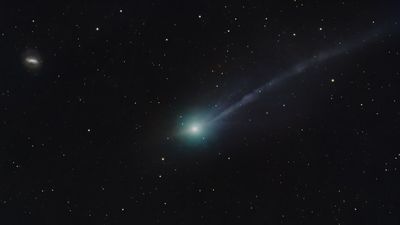
LiveScience · Feb 13 Newly visible, city-size 'green comet' will soon be ejected into interstellar space — just like 3I/ATLAS Comet Wierzchoś, also known as C/2024 E1, is rapidly brightening as it approaches its closest point to Earth next week. But experts predict it will eventually be thrown out of the solar system forever, just like the "alien" comet 3I/ATLAS.
Space · Feb 11 Could the remains of a 'dead' comet still be in the solar system? Astronomers are still searching 6 years later The fate of a comet that was predicted to pass close to Earth remains a mystery five years after its dramatic breakup in the inner solar system.