Imagine newsletter: penguins, satellites and pink poo This roundup of The Conversation’s environment coverage was first published in our award-winning weekly climate action newsletter, Imagine. The Conversation · Sep 17
Are data centres actually noisy, and is this bad for our health? In the United States, areas such as Michigan have been hotspots for residents pushing back against data centre construction in their neighbourhoods. Now, similar concerns about noise – and potential health impacts – are gaining traction in Australia. The Conversation · Sep 16
Rapid Houthi advances in Yemen pose massive strategic risks for Saudi Arabia in the Gulf An advance by Yemen’s Houthi rebels, which has included the targeting of Saudi cities and infrastructure, has quickly complicated a widening Middle East war. The Conversation · Sep 16
Australia’s data centre build-out carries risks for the economy – and inflation Australia is in the middle of a data centre construction boom. Driven by artificial intelligence (AI) and growing demand for digital services, global technology companies are expected to invest up to A$150 billion in Australian data centres by 2030. The Conversation · Sep 15
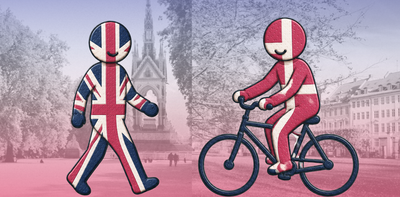
The real reason Britons are more medicated than Danes It is tempting to tell a tidy story in which people in Britain take too many pills because they exercise too little and eat too poorly, while Danes stay slim by cycling everywhere. The assumption is that Britain relies on medication to fix lifestyle failures, whereas Denmark relies on prevention. The Conversation · Sep 15
Our journalism is free to read. Your support keeps it that way The Conversation Africa has published more than 13,000 articles since it launched in 2015. Written by academics and researchers, these articles have covered topics ranging from political developments to health, climate change, environmental science, education, economics, culture and technology. The Conversation · Sep 14
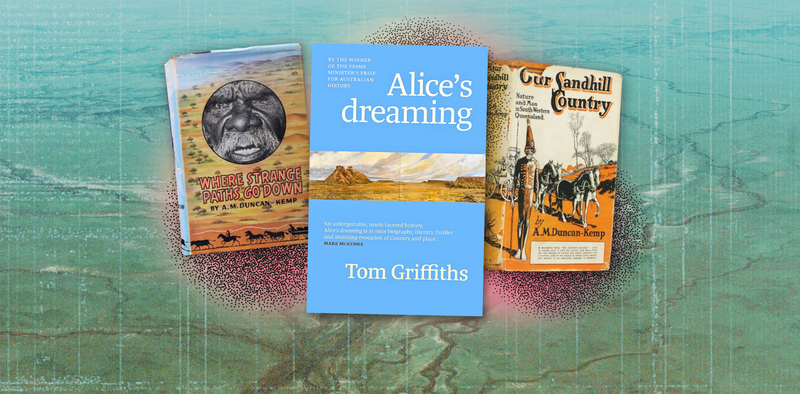
Alice Duncan-Kemp was an empathetic observer of Mithaka culture, but her legacy is complicated Alice’s dreaming is centrally about the childhood, memories and writings of Alice Duncan-Kemp (1901-1988), who grew up on a pastoral property named Mooraberrie in the first decades of the 20th century. The Conversation · Sep 13
Data centres have existed for decades. So why are they so controversial now? Until recently, data centres attracted relatively little public attention. They were largely treated as invisible pieces of digital infrastructure: essential but rarely discussed outside technical and industry circles. The Conversation · Sep 13
View from The Hill: Albanese lashes Hanson over attack on his mother Anthony Albanese has hit back angrily and emotionally at Pauline Hanson for saying his late mother should not have lived in public housing for decades. The Conversation · Sep 13
A day in the life: a look at the Danish way versus the British way Denmark and the UK are often compared when it comes to health. Danes live longer, survive more cancers and report higher levels of wellbeing. The Conversation · Sep 11
UK changes its tune on Israeli policies in the West Bank There’s been a broad spectrum of reactions to the UK government’s decision to introduce a ban on trade in goods and services from illegal Israeli settlements. These have ranged from “it’s about time”, to “too little, too late” to “pathetic undergraduate politics” (this last from someone I was chatting to… The Conversation · Sep 11
In 2025, scientists found 'strongest hints yet' of life on Mars and K2-18b—but, a survey of hundreds of astrobiologists say we still haven’t found aliens Recent scientific findings on K2-18b and Mars sparked alien life speculation. A survey revealed few astrobiologists believed these discoveries confirmed extraterrestrial life. Researchers found the K2-18b exoplanet evidence less convincing than Martian rock features. Many scientists remained neutral, awaiting further analysis and ruling out non-biological explanations. These intriguing clues offer… The Economic Times · Sep 10
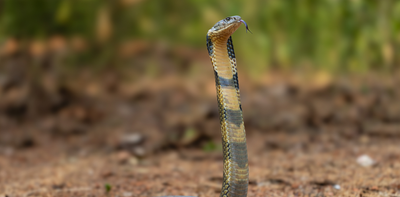
Snakebites kill tens of thousands every year, could our new research change that? Every year, between 80,000 and 140,000 people die from snakebites worldwide. Hundreds of thousands more are left with amputated limbs or permanent disabilities. The Conversation · Sep 10
Space weather can cause both beautiful auroras and infrastructure challenges – 5 essential reads on protecting life and technology Most days, you can look up and see the Sun shining above. Even if it’s hidden behind clouds, you know it’s there, lighting up the sky. But while the Sun’s light might be relatively constant, its surface is surprisingly active. If you hopped on NASA’s Parker Solar Probe for a… The Conversation · Sep 9
The Conversation · Sep 9 View from The Hill: When what’s good for the goose is not okay for the gander We see it often: political players insisting what’s good for the goose shouldn’t apply to the gander.
The Conversation · Sep 8 Denmark is a cycling nation, but our research shows rates are declining – here’s why Across Europe, cycling is being promoted as a key solution to cleaner, healthier travel. The European Commission recently published its first progress report on the European Declaration on Cycling, highlighting billions of euros in investment, thousands of kilometres of new or upgraded cycle infrastructure, and growing political commitment to treating…
The Conversation · Sep 8 The ‘core’ of One Nation’s super proposal is sound, says former Grattan Institute chief John Daley Former head of the Grattan Institute John Daley has backed “the core” of One Nation’s controversial superannuation plan to allow people to withdraw part of their future contributions.
The Conversation · Sep 7 Fire and floods are usually treated as separate hazards. Portugal’s Pinhal Interior shows why they are part of the same cycle Across southern Europe, increasingly extreme heat, wildfire and intense rainfall are forcing planners to consider how one event can alter the risk of the next. Portugal’s exceptionally wet winter and another summer of wildfire risk are an example of this. As a professor of architecture and climate change adaptation who…
The Conversation · Sep 4 The pastry paradox: why are the Danes slimmer than Britons? Picture a cosy Danish living room. Candles flicker, soft music plays and friends and family gather around a table laden with pastries – flaky, buttery and gloriously calorific. This is hygge in action, and it seems almost tailor made to give any health conscious Briton a mild panic attack.
The Conversation · Sep 4 View from The Hill: ‘Howard’s battlers’ and ‘Tony’s tradies’ are now responding to the drum beat of One Nation He is in his late fifties and lives outside a capital city. He owns his home — most often outright — and he still gets up and goes to work. He did a trade or a TAFE diploma rather than a degree, speaks only English at home, and calls his…
The Conversation · Sep 3 Politics with Michelle Grattan: Sarah Hanson-Young on why progressives need to ‘take on’ One Nation First elected to parliament in 2007 at the age of 25, Sarah Hanson-Young is now the Greens’ longest serving federal politician.
The Conversation · Sep 2 Google’s AI overviews reinforce some conspiracy theories – new research Imagine overhearing on a bus that the city council plans to implement new restrictions under an urban planning program called “15-minute cities”. Curious, you search the term on Google.
The Conversation · Sep 1 Denmark versus UK: which country gets more health for their money? Denmark and the UK both wear the badge of universal healthcare with pride. Nobody is turned away, nobody is handed a bill on the way out. And the principle – that where you are born or how much you earn should not determine whether you live or die – is…
The Conversation · Sep 1 Introducing our new collaboration: Health Gap – Sundhedskløften At first glance, Denmark and the UK do not seem to offer obvious health comparisons.
The Conversation · Aug 30 Why some US Republicans want to punish Australia over new charges for tech giants Earlier this month, the federal government passed laws to encourage tech giants to pay Australian news businesses for journalism. This is known as the News Bargaining Incentive.
















 The Conversation
 LiveScience
 Medical Daily
 The Economic Times
 Bored Panda
 International Business Times
 Latin Times
 Space
Space
 We Got This Covered
