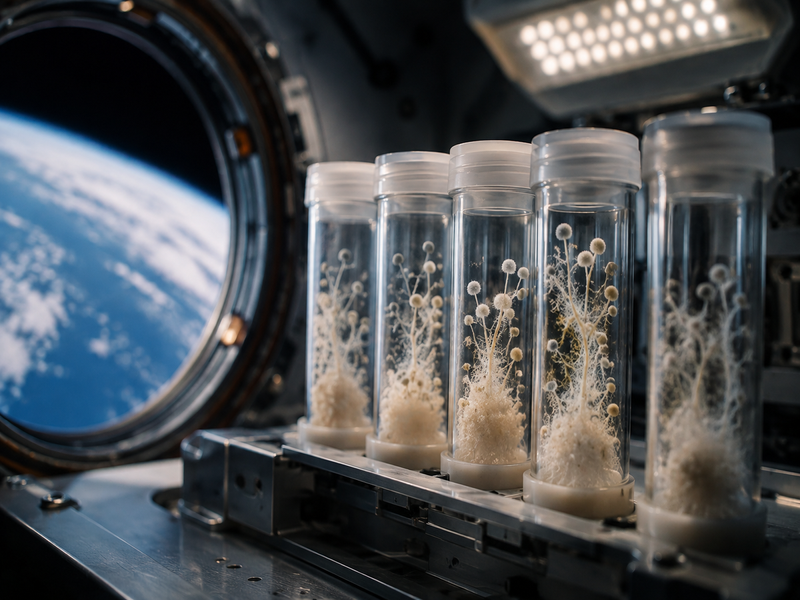
In 1983, NASA flew Neurospora bread mold on STS-9 to test its body clock; the rhythm persisted, but faded out in 25% of flight tubes before light restored it
In 1983, NASA conducted research on fungal circadian rhythms aboard the Space Shuttle Columbia, observing the bread mold Neurospora crassa. While some cultures maintained a consistent rhythm under space conditions, others lost this pattern until they were exposed to regular light. This experiment marked an early demonstration of biological clocks…

The Economic Times ·