You be the judge: should my girlfriend stop letting the recycling pile up? Robin keeps used packaging on the kitchen ledge. Benny thinks that’s unhygienic. You decide who’s talking rubbish The Guardian - UK · Sep 3
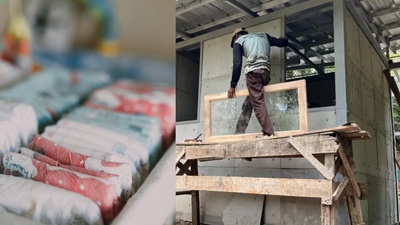
In 2023, a PhD student helped build a 387-square-foot house in Indonesia using 1.7 cubic metres of waste from used baby diapers Used nappies are among the less obvious materials that could end up in a building. In Indonesia, however, a team of engineers explored exactly that possibility while looking for ways to reduce both construction material use and the growing volume of disposable waste. They collected used nappies, cleaned and sterilised… The Times of India · Sep 3
In 2011, ICE Chicago relied on 1 recycling bin for 200 workers; a hybrid system of 4 centers and desk boxes raised recycling to 38% and participation to 85% The U.S. Immigration and Customs Enforcement Chicago Field Office enhanced its recycling program. They established four recycling centers and provided individual workstation boxes for employees. This initiative achieved a significant 38% recycling rate and high participation. Education and handling sensitive documents were key program components. The Economic Times · Sep 2
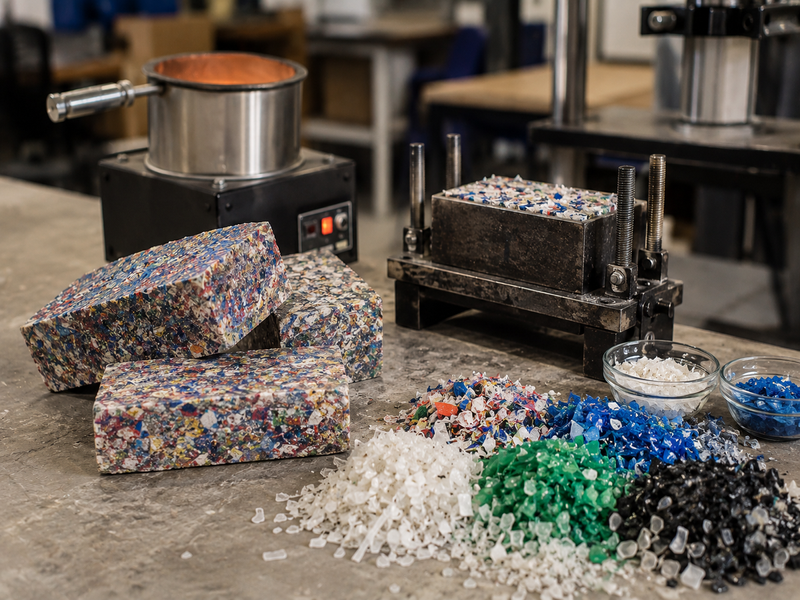
In 2022, Duke students shredded and melted plastics 1, 2, 4 and 5 into bricks; a $248.84 setup produced blocks holding over 5,000 N in compression tests Students at Duke University embarked on an innovative project, transforming everyday household plastic waste into strong building bricks. Their cost-effective approach utilized widely available plastics, such as PET and HDPE, which exhibited superior strength and insulation compared to traditional materials. A related study revealed that walls made from these plastic… The Economic Times · Sep 2
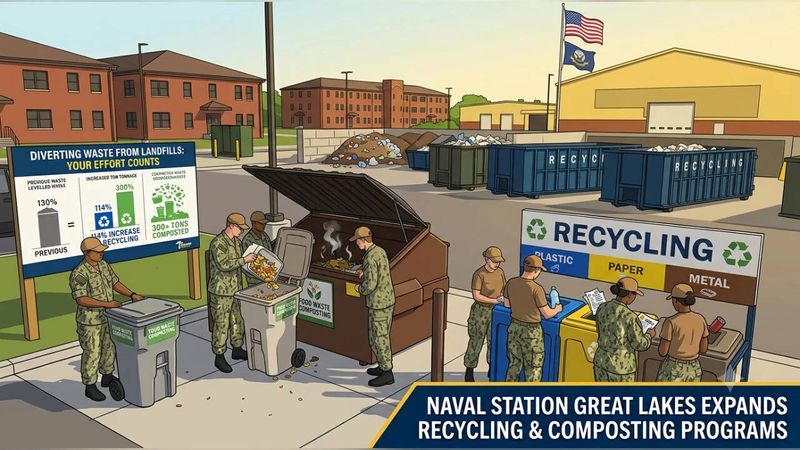
In 2011, Naval Station Great Lakes added composting and recycling bins. 3 years later, the Navy had diverted 300 tons of food and yard waste and recycled 114% more waste Naval Station Great Lakes enhanced waste management after joining the Federal Green Challenge. The station increased recycling by 114 percent and composted over 300 tons of waste. Food waste from five galleys was collected for composting and additional recycling bins were added. Employees and trainees supported these programs through active… The Economic Times · Sep 2
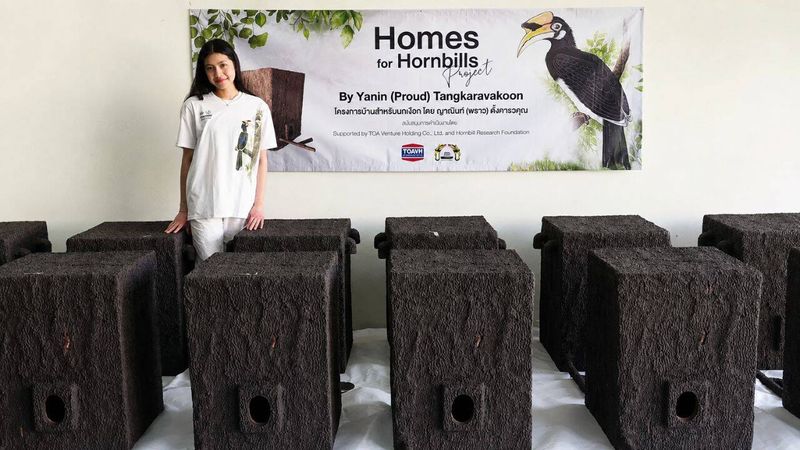
Meet Yanin ‘Proud’, a 17-year-old Thai student who built artificial hornbill nests from recycled plastic and won two global conservation awards At just 17, Thai student Yanin ‘Proud’ Tangkaravakoon has turned a concern for endangered hornbills into a unique conservation project that gives discarded waste plastic a new purpose. Her initiative, ‘Homes for Hornbills’ creates artificial nests designed to provide breeding spaces for hornbills as natural tree cavities become harder to… The Times of India · Sep 2
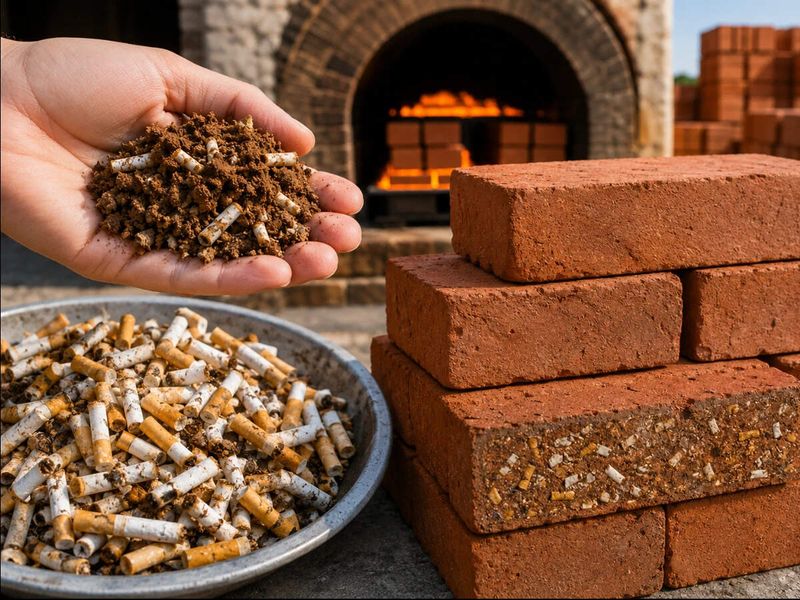
RMIT engineers mixed 1% recycled cigarette butts into fired-clay bricks, and the bricks matched standard strength while cutting firing energy by 10% In Melbourne, engineers are pioneering a groundbreaking technique to integrate discarded cigarette butts into building bricks. This eco-friendly innovation looks to recycle billions of cigarette filters each year, creating bricks that are not only structurally sound but also require less energy to produce. By firing the bricks at high temperatures,… The Economic Times · Sep 2
What to do with empty cardboard boxes? Try these 4 creative DIY reuse ideas for stylish and practical home storage Cardboard delivery boxes can be a clever addition to any Indian household. With a few modifications, robust boxes can easily turn into magazine or file holders. Smaller sizes can work wonders as desk organisers, helping to declutter your space and cut costs. Meanwhile, larger boxes serve as perfect storage solutions… The Economic Times · Sep 2
In 2007, Capannori rejected a new incinerator and embraced zero waste. 19 years later, its door-to-door system helped push recycling above 80% and inspire Italy’s movement Capannori, a town near Lucca in Tuscany, developed a Zero Waste approach after residents opposed a proposed incinerator. Rossano Ercolini and Dr Paul Connett helped build opposition to the project, while later efforts focused on reducing waste and improving collection. Door-to-door collection expanded across the municipality, reaching 82% source separation… The Economic Times · Sep 1
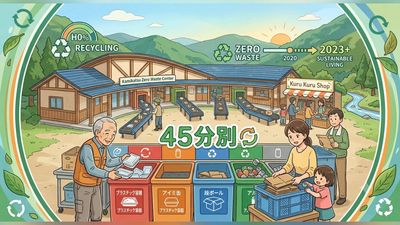
In 2003, Kamikatsu made a zero-waste pledge for 2020. 17 years later, residents sorted trash into 45 categories and recycled over 80%, but producers needed to change too Kamikatsu, a Japanese town, pursued a zero-waste goal starting in 2003. Residents meticulously sort waste into 45 categories at a central site. This system achieved an 81% recycling rate by 2016. However, some materials still required incineration outside the town. The town's waste management evolved over several decades from burning… The Economic Times · Sep 1
In 2012, Chicago’s Railroad Retirement Board found new life for 3,200 pounds of electronics through reuse and recycling; the effort lifted waste diversion nearly 10% The U.S. Railroad Retirement Board successfully recycled over 3,200 pounds of electronic waste. This achievement was driven by federal programs like Computers for Learning and property management. Excess computers were donated to schools, boosting staff morale and program continuation. Other electronics were recycled by certified vendors, ensuring best practices were… The Economic Times · Sep 1
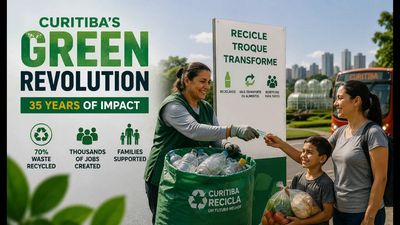
In 1991, Curitiba began exchanging recyclables for bus tokens and food. 35 years later, the city recycles 70% of its waste while creating jobs and supporting families In Curitiba, Brazil, residents can exchange recyclable waste for fresh food. Other cities have found different uses for what people throw away. Belo Horizonte has brought waste pickers into formal recycling systems. Bogotá captures landfill methane to produce energy. These programs reveal a practical shift in urban waste management: garbage… The Economic Times · Sep 1
Notting Hill Carnival clean-up sees 300 tonnes of rubbish cleared from streets after two million party in west London Around 200 staff worked through the night on Sunday and Monday to clear waste left across the Carnival footprint Evening Standard · Sep 1
In 1993, Taiwan collected 70% of its trash while recycling virtually none. 33 years later, paid bags, musical trucks and sorting helped drive recycling to 55% nationwide Taiwan’s experience therefore challenges the idea that recycling depends mainly on individual environmental enthusiasm. People certainly need to participate, but participation becomes easier when governments create systems that are convenient, predictable and enforceable. The Economic Times · Aug 31
The Economic Times · Aug 31 In 2023, Rice researchers flashed mixed waste plastic for about 4 seconds at 3,100 K; the process recovered up to 68% of its hydrogen at purities reaching 94% and produced graphene A group of researchers has pioneered a groundbreaking technique that transforms landfill plastic into hydrogen gas, a valuable energy source. By employing flash Joule heating, this process effectively disintegrates plastic waste, resulting in a cleaner alternative for hydrogen production. Additionally, it produces graphene, a byproduct that can finance the hydrogen…
The Times of India · Aug 31 In 2022, Melbourne's M80 became Victoria's first major road project with recycled content in every pavement layer, reusing 35.5 million plastic bags and 22 million bottles Melbourne's M80 Ring Road upgrade utilized recycled materials throughout its pavement layers. This project incorporated waste equivalent to millions of plastic bags and glass bottles. Recycled pavement materials and eMesh were also extensively used in the construction. The upgrade aimed to improve capacity, safety, and traffic reliability on the freeway.…
The Economic Times · Aug 31 Two Canadian builders turned 612,000 plastic bottles into 2,000-sq-ft home in Nova Scotia; its panels were so strong they withstood sustained winds of 326 mph, twice the strength of Category 5 hurricane Canadian builders transformed more than 600,000 plastic bottles into a house. The recycled PET was processed into foam and used to make structural composite panels. These panels demonstrated remarkable strength during wind-testing simulations. The project explored the potential of recycled plastic for various construction applications, offering an innovative approach to…
The Times of India · Aug 31 In 2025, Texas engineers mixed 4.5 tons of recycled plastic into a highway, replacing part of the bitumen to test how it handles extreme heat On State Highway 205 in Rockwall, a suburb east of Dallas, engineers paved a 3,500-foot stretch of road using about 4.5 tons of recycled plastic mixed directly into the asphalt. The project, led by Sahadat Hossain, a civil engineering professor at the University of Texas at Arlington, replaces a portion…
The Times of India · Aug 31 Two Canadian builders turned 612,000 recycled plastic bottles into a 2,000-sq-ft home; its panels were tested to withstand sustained winds of 326 mph, twice Category 5 hurricane strength In an innovative project, builders in Nova Scotia have successfully created a house using recycled plastic bottles. These bottles were reshaped into high-performance composite panels, exemplifying the practicality of recycled materials in modern construction. The panels not only endured severe wind conditions but also showcased the durability and efficiency of…
The Times of India · Aug 30 Wind turbine blades are built to survive decades and are difficult to recycle; an Iowa plant mechanically shreds them into fibres and powders for concrete, mortar and asphalt Regen Fiber has opened a wind turbine blade recycling facility in Fairfax, Iowa, using an all-mechanical process that avoids heat and chemicals. The plant shreds old blades into fibres and additives for use in concrete, mortar and asphalt. It expects to process more than 30,000 tons of blades each year.
The Economic Times · Aug 30 Miami researchers tested concrete that replaced sand with leaded CRT glass; a biopolymer helped limit lead leaching before durability damage raised concerns Researchers explored using toxic CRT glass in concrete mixtures. This hazardous waste contains significant amounts of lead, posing environmental risks. A biopolymer additive effectively trapped the lead within the concrete. Durability tests revealed some damage, but lead leaching remained manageable. This research offers a potential solution for electronic waste disposal.
The Economic Times · Aug 30 In 2026, Texas engineers mixed 4.5 tons of waste plastic into nearly a mile of road; the recycled material replaced 8% to 10% of petroleum-based bitumen Innovative researchers are pioneering the use of recycled plastic to improve the durability of asphalt roads. By substituting a portion of traditional bitumen with plastic materials, they have observed encouraging results in early field tests, indicating enhanced resistance to heat and cracking. Additionally, laboratory studies demonstrate increased pavement stiffness and…
The Economic Times · Aug 30 In 2019, RMIT researchers fired clay bricks mixed with treated sewage sludge; a 25% biosolids batch cut firing energy by 48.6% while passing strength tests Researchers are exploring ways to recycle sewage sludge into building materials. Mixing biosolids into clay significantly cuts the energy needed for brick firing. This process helps reduce landfill waste and the environmental impact of construction. Studies show sludge can either maintain or improve brick strength depending on conditions. These innovations…
The Economic Times · Aug 30 How a student turned waste glass into an ‘oyster home’ and won Rs 1.2 lakh award A Florida high school student, Delaney Peterson, has explored an unusual way to support oyster reef restoration, by turning discarded glass into a potential habitat for young oysters. Her research tested recycled foamed glass aggregate as a hard surface where oyster larvae could settle and grow. The project, which connects…
The Times of India · Aug 30 A Colombian man struggling to build his own home helped create Lego-like bricks from recycled plastic; by 2015 the system was sheltering 42 displaced families and could build a 40-sq-m home in 5 days A Colombian architect helped develop Lego-like building blocks made from recycled plastic and rubber to create temporary and permanent homes. The system was used to build shelters for 42 displaced families in Guapi in 2015. Four people could assemble a 40-square-metre house in five days, without using glue, cement or…