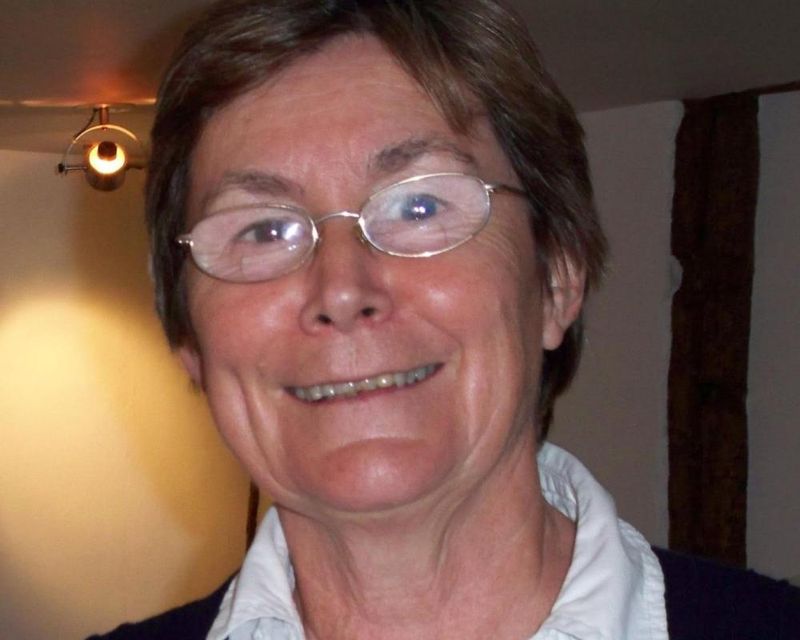
Ann Barrett obituary Oncologist and authority on paediatric radiotherapy who championed a multidisciplinary, holistic approach The Guardian - UK · May 5
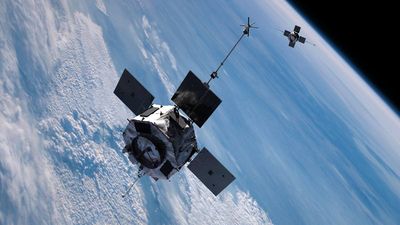
Thinner than a hair and stretchy like rubber: New material could shield against radiation in next-gen space tech Scientists have developed a new material that could shield humans and critical technology from harmful radiation. Space · May 1
Photography student sends film into space – and ends up capturing the very essence of the universe Photography student Tom Liggett sent film to 120,000 ft in a hot-air balloon, where cosmic radiation from black holes “billions of light-years away” burned abstract patterns Digital Camera World · Apr 30
62% of Americans Don't Have a Bachelor's Degree — Here Are 9 Jobs That Pay Up to $100K Without One Discover the high-paying jobs without a degree that are dominating the 2026 US labour market. International Business Times UK · Apr 28
Chernobyl, 40 years on: the disaster that triggered the downfall of a superpower As radiation spread across Europe in April 1986, so did the truth about a political system built on silence. Four decades on, RFI spoke to history and politics professor Oleg Kobtzeff about how the Chernobyl nuclear disaster exposed the USSR's culture of secrecy, and was among the catalysts for its… Radio France Internationale · Apr 26
Study shows no genetic harm in children of Chernobyl radiation survivors A major international study found no additional DNA damage in children conceived after the Chernobyl disaster linked to their parents' radiation exposure. Researchers analyzed families where parents were involved in cleanup or lived near the zone, revealing stable genetic patterns across generations. These findings, published in 'Science', may alleviate concerns… The Times of India · Apr 26
On 40th Chernobyl disaster anniversary, Zelenskyy accuses Russia of committing 'nuclear terrorism' Ukrainians gathered to honour those who died from the accident, as well as the hundreds of thousands who cleaned up after the disaster, exposing themselves to high levels of radiation. Euronews · Apr 26
‘He refused to say that there was no radiation and no danger to the population' The events of 26 April, 1986, changed the lives of millions of Ukrainians, and people beyond Ukraine’s borders, when Reactor 4 of the Chernobyl Nuclear Power Plant underwent a catastrophic failure during a safety test. RFI spoke with Dr Andrei Kindzelski, son of Professor Leonid Kindzelski, chief radiologist of the… Radio France Internationale · Apr 26
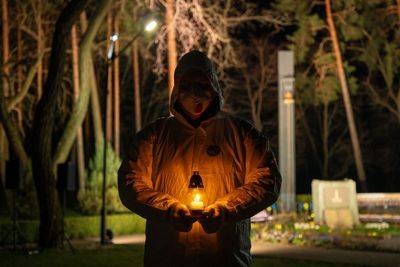
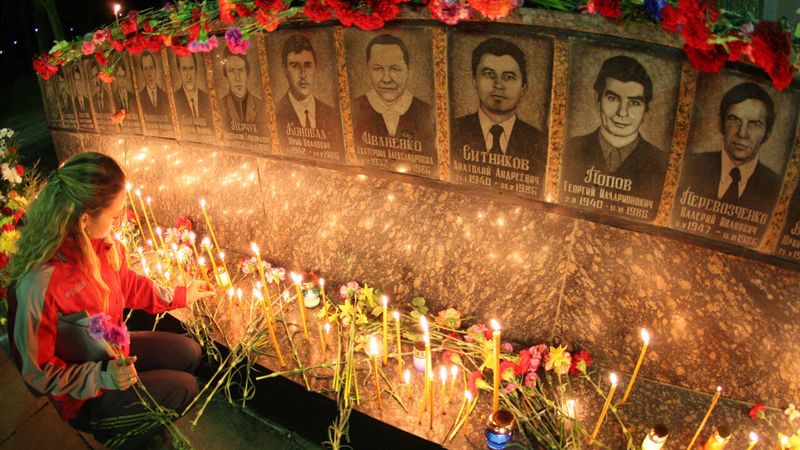
Despite Russia’s war, one Ukrainian city still gathers for midnight Chernobyl vigil Ukrainians gathered in the city of Slavutych to remember those affected by the Chernobyl nuclear disaster 40 years ago The Independent UK · Apr 26
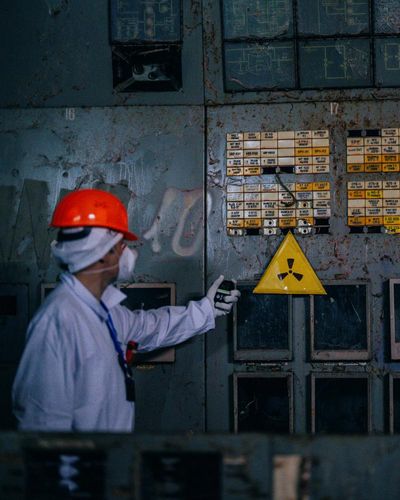
Inside Chornobyl: 40 years after disaster, nuclear site still at risk in Russia’s war In February 2025, a cheap Russian drone tore through Chornobyl’s confinement shelter. Workers warn the site of the world’s worst nuclear accident is not safe yet The Guardian - UK · Apr 25
Ukrainians thought they had reduced the risks at Chernobyl. Then Russia invaded The two explosions at the Chernobyl nuclear power plant came decades apart The Independent UK · Apr 25
Israeli PM Netanyahu reveals cancer diagnosis; underwent prostate surgery a year ago Israeli Prime Minister Benjamin Netanyahu revealed he underwent treatment for an early-stage prostate cancer, diagnosed several months ago. He had surgery for an enlarged benign prostate over a year prior and recently completed radiation therapy for the malignant tumor, which doctors say has disappeared. The disclosure follows his annual medical… The Times of India · Apr 24
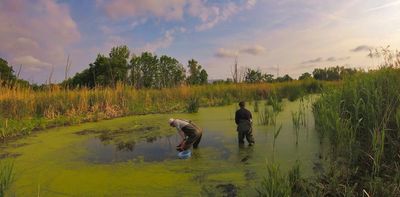
Chernobyl’s exclusion zone is a beacon of biodiversity – but it faces new threats from Russia’s invasion April 26 marks the 40th anniversary of the explosion at Reactor 4 of the Chernobyl nuclear power plant in Ukraine. The accident caused the largest ever release of radioactive material into the environment, and at the time people predicted that the affected area would be rendered uninhabitable, devoid of life… The Conversation · Apr 24
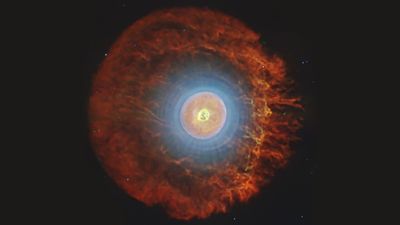
James Webb Space Telescope peers into a dying star surrounded by mysterious buckyballs: 'The structures we're seeing now are breathtaking' The James Webb Space Telescope captured the first detailed images of planetary nebula Tc 1, revealing new details of what happens after a sun-like star dies. Space · Apr 23
The Conversation · Apr 22 Chernobyl at 40: the lies, the loss and why we can’t let go Some historical events are so catastrophic they resist comprehension. And yet they compel us to try to understand them, again and again.
The Conversation · Apr 22 Chernobyl’s wildlife: the real story isn’t the presence of radiation – it’s the absence of humans “Dogs at Chernobyl are now genetically distinct … thanks to years of exposure to ionizing radiation, study finds.”
MyLifeXP · Apr 22 The Most Painful Deaths Explained by Science There are few topics that trigger as much curiosity, fear, and uncomfortable fascination as death, not because it is rare, but because it is inevitable, and while most people hope for a peaceful end, science makes one thing very clear: not all deaths are experienced the same way. Some occur…
The Conversation · Apr 22 Chernobyl at 40: Secret Stasi files reveal extent of Soviet misinformation campaign over nuclear disaster On April 26, 1986, Soviet engineers at the Chernobyl nuclear power plant were conducting a safety test. Doomed by a fatal design flaw and pushed to the limit by human negligence, reactor 4 exploded amid an attempted shutdown during a routine procedure, setting off a chain of events that ultimately…
The Independent UK · Apr 22 PHOTO ESSAY: AP photographer chronicles Chernobyl’s painful legacy of silence, sacrifice and danger Efrem Lukatsky, a Kyiv-based photographer for The Associated Press, was living in the city on April 26, 1986, when the explosion and fire struck the Chernobyl nuclear power plant, about a two-hour drive away. He has visited the plant and the “exclusion zone” around it dozens of times. He recalls…
The Conversation · Apr 21 Forty years after the Chernobyl disaster, its legacy still resonates The explosion at the fourth reactor of the Chernobyl Nuclear Power Plant in northern Ukraine on April 26, 1986, changed the lives of thousands of Soviet citizens.
The Conversation · Apr 21 Research at Chernobyl and Fukushima shows how radioactive materials move in the environment When nuclear accidents happen, many people imagine radiation spreading everywhere and lasting forever. The reality is more complex. Radioactive materials move, change and sometimes disappear faster than people expect.
The Conversation · Apr 20 40 years on from the disaster, why there are foxes, bears and bison again around Chernobyl In the novel When There Are Wolves Again by E.J. Swift, the Chernobyl disaster and its legacy is extrapolated to a near future where natural habitats are depleted and precarious.
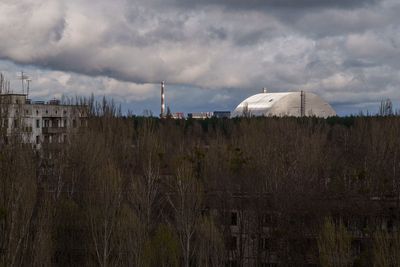
Euronews · Apr 14 Chernobyl could face 'catastrophic' collapse as repairs stall following Russian drone strike Failure to repair the protective structure around the nuclear site could unleash 'highly radioactive dust' that 'does not recognise borders', experts warn.
Tom’s Hardware · Apr 13 New tech can see a CPU's transistors in action — terahertz radiation can potentially steal data as a chip is running Researchers have discovered a way of probing a microchip processor's individual transistors while it is working with terahertz radiation.
Bored Panda · Apr 13 29 Medical Devices From The Past That Might Make You Grateful For Modern Healthcare (New Pics) Modern medicine helps us stay healthy and recover from illnesses that once had no cure. But getting here took centuries of experimentation, and not every method along the way was reassuring. In fact, some were the exact opposite. As medicine evolved through trial and error, plenty of strange devices were…

















 Space
Space
 The Independent UK
 The Economic Times
 The Conversation
 Medical Daily
 International Business Times UK
 LiveScience
 The Times of India
 Times Life
 Euronews
 International Business Times
 The Guardian - UK
