
21.09.2026 à 17:44
Climate change also poses a threat to cultural heritage
Anthony Schrapffer, PhD, EDHEC Climate Institute Scientific Director, EDHEC Business School
Camille Angué, Directrice de l'EDHEC Climate Institute, EDHEC Business School
Texte intégral (1785 mots)
When we talk about climate change, the debate usually centres on energy, biodiversity, carbon emissions or the economic costs of the transition. But another aspect of the problem remains largely underestimated: the impact of climate change on our cultural heritage.
43% of UNESCO World Heritage Sites in Europe are currently highly exposed to extreme weather events, flooding and rising sea levels. Our research arrives at this estimate by applying the climate risk quantification methodologies developed at the EDHEC Climate Institute to relevant physical assets sourced from the UNESCO spatial database.
This vulnerability does not only affect a few iconic sites, such as Venice, or certain historic centres in the Mediterranean. It affects the whole of Europe’s cultural infrastructure, including less visible artefacts, which are often scattered among churches, libraries, local collections or small museums.
The risks are already very real. Artworks and museum collections are directly exposed to flooding, fluctuations in humidity, heatwaves and failures affecting conservation systems. A survey of American art museums reveals that 35% of directors report having already suffered climate-related damage, while 50% say they have put specific plans in place to address these risks. In France, the Louvre Museum has, in fact, begun transferring around 250,000 works to its Liévin Conservation Centre, in Pas-de-Calais, in order to protect the national collections from the risk of flooding.
There are many major threats:
- increased humidity and the growth of mould affecting paintings and frescoes
- the deterioration of materials due to temperature fluctuations
- the increase in acid rain
- and the rise in the number of fires, floods and landslides.
Even music is affected
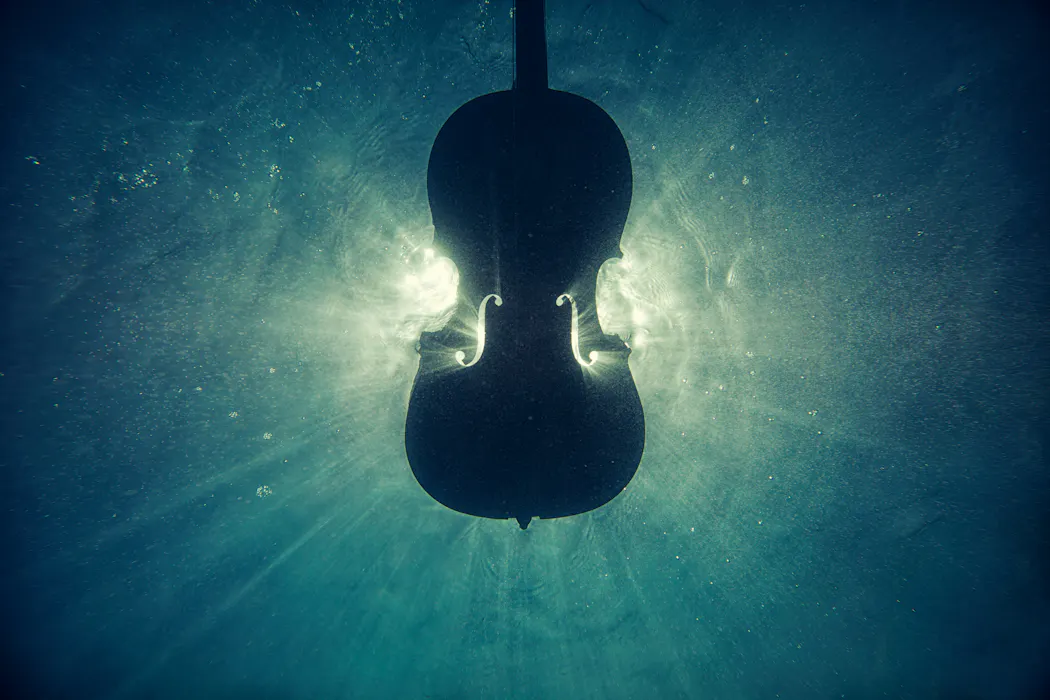
Musical heritage itself is not immune to this climate-related fragility. The manufacture of musical instruments depends on natural resources that are particularly vulnerable to global warming. The tonewood spruce from the Val di Fiemme in the Dolomites (Italy), historically used for Stradivarius violins, is now threatened by rising temperatures and the spread of pests. The woods used for bows and stringed instruments are also becoming scarcer due to water stress and deforestation.
Concert halls and opera houses are also directly at risk. In Venice, climate projections suggest that by 2100, the increase in episodes of “acqua alta” could make it impossible to maintain normal operations at La Fenice opera house.
Other major cultural venues located in coastal areas could face similar challenges: the Royal Festival Hall (London, UK), Harpa (Reykjavik, Iceland), the Sydney Opera House (Sydney, Australia), the Elbphilharmonie (Hamburg, Germany) and the Muziekgebouw aan’t IJ (Amsterdam, Netherlands).
A major economic challenge
Added to this cultural fragility is another challenge: the economic capacity to fund the protection of these heritage sites. Our macroeconomic projections show that some major European cultural regions could suffer significant economic losses by the end of the century as a result of climate-related physical risks. The impacts on local gross regional product (the equivalent of local GDP) are particularly pronounced in Mediterranean cities.
By 2100, losses could reach 32% in Madrid and up to 41% in Rome, a level significantly higher than that estimated at national level, where Italy’s GDP decline is projected at 19%. Other major European capitals are also severely affected, with losses estimated at 13% in Vienna and 18% in Berlin.
This paradox is key: it is precisely at the moment when the investment required to protect our heritage will be the greatest that financial resources may be most limited.
Climate as a cultural issue
For a long time, climate change has been viewed as a problem relating to natural resources or energy balances. It is now also emerging as a cultural and civilisational issue.
It raises questions about our relationship with cultural transmission, collective memory and the preservation of assets that can neither be reproduced nor replaced.
The difficulty lies in the fact that it is not merely a matter of protecting objects or buildings, but of preserving the physical conditions that enable the continuity of history, heritage and artistic creation.
Irreplaceable cultural artefacts
Classical and neoclassical economics have historically been based on the assumption of substitutability of factors of production (see David Ricardo, Jean-Baptiste Say and Robert Solow): natural resources that are destroyed, depleted or becoming scarce could be offset by increased capital accumulation, productive investment or technical progress. Although heavily criticised, this assumption of substitutability remains one of the central pillars of a large proportion of contemporary macroeconomic models.
This approach reaches an obvious limit when it comes to cultural heritage. A fresco destroyed by damp cannot be replaced. An ancient mosaic damaged by thermal stress or acid rain cannot be recreated identically. A submerged archaeological site is lost irreversibly.
It is precisely this notion of irreversibility that distinguishes cultural heritage from other categories of economic goods.
This contradiction between economic expansion and environmental limits does not necessarily lead to a historical impasse. The “possibilist” economic approach (inherited in particular from Paul Vidal de La Blache) reminds us that human societies never develop independently of their environment. Nature imposes a set of constraints and possibilities with which economic organisations must contend. This perspective breaks with the idea of potentially unlimited growth and reintroduces the material reality of ecological conditions into economic analysis.
From a more dialectical perspective, close to Hegelian thought, ecological and energy crises can also be interpreted as a moment of profound transformation for industrial societies. The current tensions open up the possibility of moving beyond the status quo: a reorientation of production systems, the integration of ecological constraints into economic rationality, a redefinition of the criteria for prosperity, and a renewal of forms of technical progress.
Preserving our collective heritage is still possible, but the window of opportunity is closing.

A weekly e-mail in English featuring expertise from scholars and researchers. It provides an introduction to the diversity of research coming out of the continent and considers some of the key issues facing European countries. Get the newsletter!

Les auteurs ne travaillent pas, ne conseillent pas, ne possèdent pas de parts, ne reçoivent pas de fonds d'une organisation qui pourrait tirer profit de cet article, et n'ont déclaré aucune autre affiliation que leur organisme de recherche.
21.09.2026 à 17:43
Et si les bactéries devenaient nos alliées contre le gaspillage alimentaire et les risques sanitaires ?
Françoise Leroi, Directrice de recherche, Ifremer
Texte intégral (1828 mots)
L’ESSENTIEL
Les pertes et le gaspillage des produits de la mer sont estimés à 30 %.
De « bonnes » bactéries peuvent être utilisées pour lutter contre les bactéries toxiques ou contre celles qui peuvent altérer le produit. C’est la biopréservation.
Des souches ont été sélectionnées et sont utilisées dans certains produits que vous avez peut-être déjà consommés.
Les produits de la mer peu transformés (saumon fumé, gravelax, crevettes cuites ou filets de poisson sous atmosphère protectrice) sont exposés à des risques microbiologiques majeurs. Malgré des protocoles d’hygiène stricts, une chaîne du froid mal maîtrisée peut entraîner le développement de bactéries pathogènes comme Listeria monocytogenes, Vibrio ou Salmonella, ou de bactéries qui dégradent la qualité organoleptique de la chair, menaçant la santé des consommateurs et générant des pertes considérables. Notre réponse ? Utiliser des bactéries pour combattre les bactéries ! Dans notre laboratoire, nous avons isolé, caractérisé et sélectionné des souches de bactéries capables de neutraliser ces menaces en reproduisant, de manière contrôlée, un mécanisme de défense déjà présent dans la nature.
Gaspillage et sécurité : des enjeux majeurs
Les produits de la mer sont particulièrement périssables. Les pertes et le gaspillage sont estimés à 30 % du volume total des produits pêchés, attribués pour une part importante à l’altération provoquée par des microorganismes : mauvaises odeurs, saveurs indésirables ou dégradation de la texture. S’y ajoutent des risques sanitaires, comme celui posé par la bactérie Listeria monocytogenes, une préoccupation majeure pour les produits de la mer prêts à consommer. Les cas de listériose restent rares, mais peuvent avoir des conséquences graves, voire mortelles, chez les personnes vulnérables (femmes enceintes, personnes âgées ou immunodéprimées). La détection de Listeria peut également conduire au rappel de lots, voire à l’arrêt temporaire d’une production, avec des conséquences économiques importantes.
Pour des raisons nutritionnelles et gustatives, certaines pratiques de conservation se modifient (réduction du taux de sel, de fumage, produits consommés crus…). Le froid et l’hygiène restent indispensables, mais ne suffisent pas toujours. Par ailleurs, les consommateurs se montrent de plus en plus réticents à l’utilisation de conservateurs chimiques et recherchent des solutions perçues comme plus naturelles.
Dans ce contexte, la biopréservation apparaît comme une solution complémentaire, douce et naturelle, pour garantir à la fois la sécurité et la qualité des produits de la mer. L’idée d’utiliser des bactéries pour lutter contre d’autres bactéries peut sembler paradoxale. C’est pourtant cette approche que nous avons décidé de mettre en place. Dans la nature, certaines bactéries utilisent un arsenal de stratégies pour éliminer leurs concurrentes (compétition nutritionnelle, production de composés antimicrobiens, etc.). Le défi de la biopréservation ? Sélectionner des bactéries aux propriétés antimicrobiennes ciblées et les introduire en grande quantité dans l’aliment, sans production de composés toxiques ni de modification de la qualité nutritionnelle et gustative, un défi difficile à relever pour des produits de la mer aux flaveurs particulièrement délicates.
Les bactéries lactiques, des bactéries « amies »
Parmi les milliers d’espèces bactériennes recensées, celles appartenant au groupe des bactéries lactiques sont particulièrement intéressantes. Elles produisent souvent des composés antimicrobiens, sont généralement considérées comme sûres et bénéficient d’une image positive auprès du public, notamment grâce aux ferments utilisés pour fabriquer les yaourts. Par ailleurs, certaines sont déjà naturellement présentes dans les produits de la mer, comme le saumon fumé. En sélectionnant les plus intéressantes, nous ne faisons donc que renforcer un processus naturel, sans introduire d’éléments étrangers.
Notre méthode, mise au point et perfectionnée depuis 30 ans à l’Ifremer, en partenariat avec l’école ONIRIS VetAgroBio Nantes, suit un processus rigoureux en plusieurs étapes. Nous prélevons d’abord des bactéries dans différents produits de la mer – poisson, crustacées, transformés ou non, conditionnés sous diverses formes – qui viennent enrichir notre collection, unique en Europe. Celle-ci compte déjà plus de 5000 souches, dont de nombreuses bactéries lactiques. Elles sont donc adaptées aux conditions spécifiques des produits de la mer (températures basses, faible teneur en sucres, etc.), des caractéristiques de croissance peu communes chez ce groupe de bactéries.
Chaque souche est ensuite testée afin d’évaluer leur capacité à tuer ou à empêcher la croissance des principales bactéries pathogènes et altérantes. Les plus prometteuses sont caractérisées et soumises à des contrôles de sécurité : absence de production de toxines, de résistance aux antibiotiques transmissibles et de gènes de virulence, notamment.
Les souches sélectionnées sont ensuite cultivées et introduites en grand nombre (~ 5 millions de bactéries par gramme d’aliment) dans les produits souhaités, qui sont ensuite conservés dans des conditions typiques (entre 0 et 4 °C) ou abusives (8 °C) pour simuler les ruptures de chaîne du froid. Nous vérifions leur efficacité pour empêcher le développement des pathogènes et leurs conséquences sur la qualité organoleptique, grâce à notre jury d’analyse sensorielle composé d’une vingtaine de personnes.
Enfin, la souche doit pouvoir être produite en quantité et conserver ses propriétés après lyophilisation pour une application industrielle réaliste.
Du laboratoire à l’assiette
Après des années de recherche, le travail et la patience ont fini par payer. Quatre souches de bactéries lactiques isolées à partir de produits de la mer et appartenant aux espèces Carnobacterium maltaromaticum, Carnobacterium divergens et Lactococcus piscium, permettent de limiter la croissance de Listeria monocytogenes dans certains aliments comme le saumon fumé, le gravlax ou les crevettes cuites. Leur intérêt ne s’arrête pas là. Ces bactéries peuvent également ralentir l’altération organoleptique, un bouclier deux-en-un unique en son genre.
Une autre souche, Latilactobacillus sakei, a fait l’objet d’un brevet pour sa capacité à prévenir la production d’histamine dans le thon, molécule produite par certaines bactéries qui peut provoquer des intoxications lorsqu’elle s’accumule dans l’aliment. Une première dans le domaine de la biopréservation.
La biopréservation n’est plus une simple promesse de laboratoire : elle est déjà une réalité industrielle. Nos résultats ont été transférés à des producteurs de ferments sous la forme de licences commerciales, avec des retombées sous forme de royalties pour l’Ifremer et ONIRIS. Avec les souches sélectionnées, les industriels ont aussi développé plusieurs gammes de produits, pour de nouvelles applications dans les aliments carnés et laitiers. Nos bactéries sont donc utilisées dans l’industrie alimentaire et vous les avez peut-être déjà consommées !
Les recherches sont toutefois loin d’être terminées. Deux projets européens – MICROORC et FOODGUARD – visent à augmenter le degré d’industrialisation de la biopréservation. L’Ifremer optimise la technologie et teste ses performances dans des produits moins transformés (concentration en sel réduite par exemple) et avec des emballages plus durables. Une validation industrielle dans les ateliers de production de saumon fumé en France est attendue pour 2027. Le procédé a également été expérimenté avec succès sur de la daurade d’élevage, une avancée inédite pour le poisson frais et un beau marché potentiel !
Pour que ces solutions puissent se généraliser, il reste certains obstacles réglementaires et sociétaux à lever. Alors que certaines bactéries protectrices sont déjà utilisées, leur statut réglementaire fait encore l’objet de discussions au niveau européen, notamment pour déterminer dans quelles conditions elles doivent être considérées comme des ingrédients ou des additifs. Une réglementation claire et harmonisée permettrait de faciliter leur adoption par les industriels.
L’acceptabilité par les consommateurs constitue un autre enjeu. Les études disponibles montrent une perception positive des ferments alimentaires, mais il reste essentiel d’expliquer ce que sont ces bactéries, pourquoi elles sont utilisées et quelles garanties encadrent leur emploi.
La biopréservation n’est pas une solution miracle, mais une réponse concrète, naturelle et durable aux défis de la conservation des produits de la mer et des aliments en général. Déjà adoptée par des industriels en France et dans le monde, elle a le potentiel de transformer en profondeur notre façon de conserver les aliments, pour le bénéfice des consommateurs, des producteurs et de la planète.
Cet article est publié dans le cadre de la Fête de la science (qui a lieu du 2 au 12 octobre 2026), dont The Conversation France est partenaire. Cette nouvelle édition porte sur la thématique « Saveurs savantes ». Retrouvez tous les événements de votre région sur le site Fetedelascience.fr.

Françoise Leroi ne travaille pas, ne conseille pas, ne possède pas de parts, ne reçoit pas de fonds d'une organisation qui pourrait tirer profit de cet article, et n'a déclaré aucune autre affiliation que son organisme de recherche.
21.09.2026 à 17:43
Cancers pédiatriques : Pourquoi les innovations thérapeutiques contre le cancer arrivent-elles si lentement chez l’enfant et l’adolescent ?
Gilles Vassal, Professeur, Université Paris-Saclay
Texte intégral (2230 mots)
L’ESSENTIEL
En matière de cancers pédiatriques, les innovations thérapeutiques sont peu nombreuses.
Les différences entre cancers de l’enfant et cancers de l’adulte expliquent en partie cette situation, mais ce n’est pas la principale raison.
Le modèle économique du secteur pharmaceutique et la réglementation actuelle sont aussi en cause.
Depuis plus de trente ans, des avancées majeures ont eu lieu dans la prise en charge d’un grand nombre de cancers de l’adulte : diagnostics précoces, nouveaux médicaments différents de la chimiothérapie, techniques chirurgicales et de radiothérapie innovantes et plus performantes.
Malheureusement, ces innovations thérapeutiques n’arrivent que très lentement chez l’enfant et l’adolescent.
Les raisons de cette lenteur sont en partie d’origine biologique, car les cancers de l’enfant sont très différents de ceux de l’adulte. Toutefois, d’autres facteurs entrent aussi en ligne de compte, notamment le modèle économique du secteur pharmaceutique, et l’existence de certaines failles réglementaires. Explications.
Les cancers de l’enfant ne sont pas ceux de l’adulte
La biologie des cancers pédiatriques est très différente de celles des cancers de l’adulte. Chez les enfants, pas de cancer du sein, du poumon, de la prostate ou du colon… On recense néanmoins plus de 60 cancers pédiatriques différents, les plus fréquents étant les leucémies et les tumeurs cérébrales.
Chaque année en France, 2 300 enfants et adolescents de moins de 18 ans sont diagnostiqués d’un cancer. Les plus fréquents sont les leucémies (650 cas par an) et les tumeurs cérébrales (550 cas par an).
Les cancers pédiatriques surviennent depuis la naissance jusqu’à l’adolescence. Soulignons qu’il n’existe pas, à ce jour, de programme de prévention des cancers pédiatriques ni de dépistage. En effet, un enfant ne boit pas, ne fume pas, et n’a pas 50 ans de mauvaise hygiène de vie derrière lui. S’il est exposé au soleil, c’est à l’âge adulte qu’il risque de développer un cancer de la peau.
Par ailleurs, à ce jour, il n’y a pas de facteurs cancérogènes exogènes connus des cancers pédiatriques. Des programmes de prévention ne peuvent donc être mis en œuvre. En revanche, on sait que la vaccination contre les papillomavirus des adolescents prévient les cancers du col utérin et de la sphère ORL chez l’adulte.
Au plan thérapeutique, les cancers de l’enfant diffèrent aussi beaucoup des cancers de l’adulte. En effet, ils sont pour la plupart très sensibles à la chimiothérapie. Depuis plus de soixante ans, les hémato-oncologues pédiatres ont donc mené des essais cliniques afin d’adapter aux enfants les chimiothérapies des adultes.
Cette approche a permis d’augmenter très significativement les taux de guérison, qui sont passés de moins de 30 % à plus de 80 %.
Malheureusement, 20 % des enfants et adolescents ont un cancer qui résiste à la chimiothérapie. Des innovations thérapeutiques sont donc urgemment nécessaires pour guérir plus et mieux les enfants et les adolescents atteints par la maladie.
Les cancers pédiatriques en chiffres Le cancer reste la première cause de décès par maladie au-delà d’un an : plus de 400 enfants et adolescents meurent chaque année du cancer en France ; Dans plus de 90 % des cas, la cause n’est pas connue ; Grâce aux progrès thérapeutiques des soixante dernières années, plus de 8 enfants sur 10 guérissent en France et en Europe ; Un tiers des patients guéris ont des séquelles à long terme qui impactent leur quotidien et leur qualité de vie.
Le problème est que, contrairement aux chimiothérapies qui ont pu être utilisées chez l’adulte et chez l’enfant jusqu’à présent, les nouvelles approches les plus innovantes, telles que les thérapies ciblées et les immunothérapies, ciblent spécifiquement la biologie des cancers de l’adulte. Elles ne sont donc pas nécessairement directement transposables aux cancers pédiatriques, car la biologie des cancers de l’enfant est différente de celles des cancers de l’adulte.
En conséquence, le développement de nouveaux traitements chez l’enfant nécessite la mise en place de programmes spécifiques. Et donc des investissements spécifiques. Or, c’est justement là que réside une partie du problème.
Un retour sur investissement jugé trop faible par les industriels
Le modèle économique du secteur pharmaceutique repose sur d’importants retours sur investissement (de 20 à 30 % espérés, tandis que le retour sur investissement médian est de 13 %).
Le retour sur investissement constitue un moteur majeur pour le développement des innovations thérapeutiques en matière de lutte contre le cancer. Or, les cancers de l’enfant sont rares. Ils ne concernent qu’une faible population et ne représentent qu’un petit marché, contrairement aux cancers de l’adulte. Pour les acteurs de l’industrie pharmaceutique, cela signifie donc une absence de retour sur investissement suffisant.
C’est ce qui explique notamment que les industriels du médicament n’ont pas investi dans le développement des chimiothérapies chez l’enfant. Dans le cas de l’adaptation des chimiothérapies des adultes aux enfants évoquées précédemment, les progrès ont été obtenus grâce aux acteurs de la recherche clinique académique, qui ont utilisé les médicaments disponibles dans les pharmacies des hôpitaux.
Un grand nombre des chimiothérapies utilisées en routine pour traiter des enfants et des adolescents n’ont d’ailleurs pas d’indication pédiatrique dans leur autorisation européenne de mise sur le marché, alors qu’elles ont été parfaitement validées par la recherche clinique académique.
Le secteur académique, acteur essentiel de la lutte contre les cancers pédiatriques
C’est un point important à souligner : les progrès considérables qui ont été réalisés depuis vint ans dans la compréhension de la biologie des cancers pédiatriques l’ont été par des chercheurs académiques, financés par les programmes de financements français et européens, ainsi que par des associations, telles qu’Imagine for Margo, capables de mobiliser la générosité du public.
Grâce à ces efforts, des cibles thérapeutiques potentielles ont été identifiées, spécifiques de certains cancers pédiatriques. Mais une fois de telles cibles identifiées, il faut investir dans le développement de médicaments pour augmenter les taux de guérison, comme le montre le cas du médulloblastome.
Cette tumeur cérébrale de l’enfant était considérée au siècle dernier comme une maladie unique. Sa prise en charge incluait la chirurgie, la chimiothérapie et la radiothérapie, et 50 % des enfants guérissaient, pour les deux tiers avec des séquelles cognitives importantes.
Des recherches menées par les acteurs académiques ont permis de démontrer que, en réalité, il s’agit de plus de quatre maladies différentes, disposant chacune d’un profil biologique spécifique, d’un pronostic différent et de cibles thérapeutiques spécifiques potentielles.
Malheureusement, malgré ces découvertes, faute d’investissement pas un seul nouveau médicament n’a été mis au point pour traiter les enfants atteints par un médulloblastome de mauvais pronostic. Ces derniers reçoivent donc aujourd’hui toujours le même programme thérapeutique qu’au siècle dernier, malgré les avancées majeures des connaissances.
Cet exemple souligne à quel point il est urgent d’investir dans le développement de nouveaux traitements contre les cancers pédiatriques. C’est l’un des objectifs que s’est donné l’Europe en 2020 dans son plan Cancer européen actuellement en vigueur. Or, justement, la question de la réglementation, notamment européenne, est capitale en matière de lutte contre les cancers pédiatriques.
Faire évoluer la réglementation
Depuis près de vingt ans, le règlement (CE) n° 1901/2006 du Parlement européen et du Conseil relatif aux médicaments à usage pédiatrique oblige les industriels à investir dans le transfert de leurs médicaments développés pour l’adulte chez l’enfant (ce texte les récompense également, en leur offrant une prolongation de leurs droits d’exclusivité, donc en retardant de six mois l’arrivée des formes génériques du médicament).
Concrètement, dans le cadre de la demande d’autorisation de mise sur le marché d’un nouveau médicament, les industriels sont tenus de présenter des résultats d’études cliniques réalisées dans un contexte pédiatrique (ce qui permet de déterminer si le médicament est utile également pour soigner les enfants, et dans quelles conditions). Ce règlement a bien fonctionné dans certaines disciplines pédiatriques, comme les maladies infectieuses et la rhumatologie.
Cependant, il a été décevant en oncologie pédiatrique. En effet, cette obligation d’évaluer un nouveau médicament chez l’enfant fait l’objet d’une dérogation si son indication (la maladie chez l’adulte) n’existe pas chez l’enfant. Or, on l’a vu, les cancers de l’adulte « n’existent pas » chez l’enfant. De ce fait, les industriels se retrouvaient dispensés de l’obligation de mener des études pédiatriques de leur médicament anticancéreux.
Un très (trop…) grand nombre de dérogations a donc été accordé. Or, rien ne justifie de telles dispenses. En effet, le mécanisme d’action d’un médicament peut aussi s’avérer efficace pour combattre des cancers pédiatriques, quand bien même ceux-ci sont différents du cancer de l’adulte pour lequel la thérapie avait initialement été conçue. Encore faut-il le tester…
Pour remédier au problème, en décembre prochain, le Parlement européen doit voter une nouvelle réglementation pharmaceutique. L’obligation de développer un médicament chez l’enfant reposera dorénavant sur la pertinence de son mécanisme d’action pour la maladie pédiatrique, et non plus sur l’existence de la même maladie chez l’adulte et chez l’enfant. Finies, donc, les dérogations scientifiquement et médicalement injustifiées. Cela suffira-t-il ?
L’avenir le dira. Mais pour mettre toutes les chances du côté des enfants, il faudra conjuguer les efforts de tous les acteurs. Les équipes académiques, les parents, les autorités réglementaires et les industriels ont appris à travailler ensemble. Les recherches scientifiques progressent, grâce notamment à la générosité du public.
Il faut maintenant mobiliser ces ressources ainsi que celles des investisseurs, des family officesLes family offices sont des structures privées gérant les investissements et les biens des familles à très hauts patrimoines., des industries responsables vis-à-vis de la société, de l’Europe et des programmes nationaux pour soutenir et accélérer le développement d’innovations thérapeutiques et diagnostiques à partir des découvertes des chercheurs académiques, en particulier le développement de médicaments spécifiques des cancers pédiatriques, qui cibleront leur biologie, différente de celles des cancers de l’adulte. Un nouveau modèle économique est possible. Let’s do it ! Faisons-le !

Gilles Vassal est membre du conseil d’administration de la Société Européenne d’Oncologie Pédiatrique (SIOPE) et membre du comité d’Orientation Stratégique de l’association Imagine for Margo.
- GÉNÉRALISTES
- Ballast
- Fakir
- Interstices
- Issues
- Korii
- Lava
- La revue des médias
- Time France
- Mouais
- Multitudes
- Positivr
- Regards
- Slate
- Smolny
- Socialter
- UPMagazine
- Le Zéphyr
- Idées ‧ Politique ‧ A à F
- Accattone
- À Contretemps
- Alter-éditions
- Contre-Attaque
- Contretemps
- CQFD
- Comptoir (Le)
- Déferlante (La)
- Esprit
- Frustration
- Idées ‧ Politique ‧ i à z
- L'Intimiste
- Jef Klak
- Lignes de Crêtes
- NonFiction
- Nouveaux Cahiers du Socialisme
- ✝ Période
- ARTS
- Beaux Arts
- L'Autre Quotidien
- Recours au poème
- Villa Albertine
- THINK-TANKS
- Fondation Copernic
- Institut La Boétie
- Institut Rousseau
- TECH
- Dans les algorithmes
- Framablog
- Goodtech.info
- Libre à lire (April)
- Quadrature du Net
- Revue Eur. Médias et Numérique
- INTERNATIONAL
- Alencontre
- Alterinfos
- Gauche.Media
- CETRI
- ESSF
- Inprecor
- Guitinews
- MULTILINGUES
- Kedistan
- Quatrième Internationale
- Viewpoint Magazine
- +972 mag
- PODCASTS
- Arrêt sur Images
- Le Diplo
- LSD
- Thinkerview